
By Rya JethaTech Culture Reporter
Published
ADVERTISEMENT
San Francisco is going to get more crowded with autonomous vehicles. Here’s what will be on the road in 2026.

In 2025, San Francisco became Waymo City. The white domed robotaxis — once a novelty — became inescapable in every neighborhood, as the fleet grew to 1,000 vehicles and completed millions of rides each month. For tourists, riding in a Waymo became a San Francisco must-do. For residents, the vehicles are a routine part of the city’s notorious traffic, which could worsen as new robotaxi operators hit the streets and face a steep learning curve.
In 2026, Waymo’s dominance will be under pressure, as San Francisco could become the only city in the world where riders can choose among four robotaxi services. Here’s a rundown of what’s in store if and when Tesla, Zoox, and Uber join Waymo in offering robo-rides in San Francisco.
“2025 was the calm before the storm,” said Scott Devitt, managing director of equity research at Wedbush Securities. “We’re about to finally see the fruits of many years of investment that have gone into robotaxi programs.”
Waymo has a healthy head start and isn’t waiting for the others to catch up. The Alphabet-owned company announced late last year that its Bay Area service area is expanding to a unified zone of more than 260 miles that will include freeways. San Jose Mineta Airport became the first major California airport to offer 24/7 Waymo rides.
The company in November received approval from the Department of Motor Vehicles to expand to an even larger Northern California continuous zone that includes the East Bay, North Bay, and Sacramento. (It will need a permit from the California Public Utilities Commission before launching commercial service in this larger area.)
Beyond the Bay, Waymo has announced plans to expand to more than 20 cities (opens in new tab) worldwide in 2026, including Tokyo and London.

“I don’t count the competitors in the same league as Waymo,” said Harry Campbell, author of The Driverless Digest (opens in new tab), a newsletter about the business of autonomous vehicles. “Waymo is the only true robotaxi in town right now, though I can see that changing in the next year or two.”
The biggest potential threat to Waymo, though still far behind in its rearview mirror, is Tesla. Unlike Waymo, which relies on costly LiDAR sensors for depth perception and remote human operators to handle edge cases, Tesla is betting on a far cheaper (and more controversial) approach: cars that can operate autonomously in all conditions, guided entirely by cameras.
Tesla rolled out its Bay Area taxi service last summer, spanning Marin, much of the East Bay, and San Francisco down to San Jose. Though Tesla’s zone of operation is larger than Waymo’s, its vehicles still operate with safety drivers, and wait times can stretch to 30 minutes when a car is available at all.


Still, industry observers are waiting for an inevitable “flip the switch” moment, when Tesla convinces regulators that its camera-based technology is safe and scalable. The company could then draw in millions of customer-owned cars when they aren’t in use, thus assembling a robotaxi fleet far larger than Waymo’s 2,500 vehicles nationwide.
“That would put Tesla in pole position,” said Devitt.
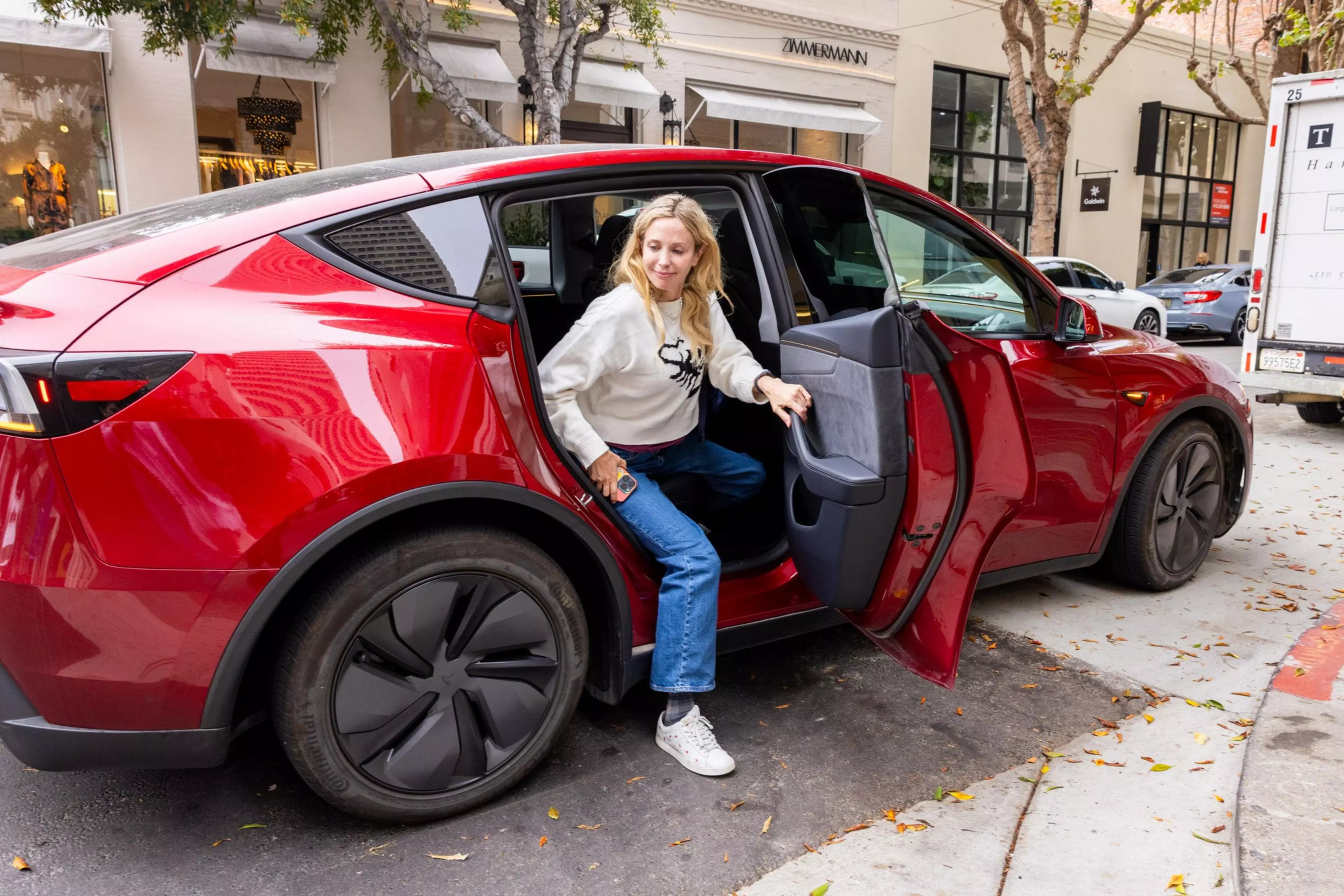
But that vision may be far off. Tesla is entangled in a string of lawsuits over its safety record. A Florida jury (opens in new tab) last year ordered the company to pay more than $240 million to the victims of a fatal 2019 crash involving its Autopilot system, which relies on cameras to assist with steering, acceleration, and braking on highways. Last month, the California Department of Motor Vehicles found Tesla in violation of state law (opens in new tab) for misleadingly marketing its technology as “autopilot” and “full self-driving capability” and warned that the company could face a 30-day suspension of its dealer license if the claims are not corrected.
Even if Tesla crosses the safety hurdles, thorny insurance and legal questions remain. It is unclear who would bear liability in a crash involving a driverless Tesla and whether individual owners would face new legal exposure.
Then there are Zoox and Uber, two wild cards entering the San Francisco market this year. Zoox, which has begun inviting people from its waitlist to take free rides in parts of SoMa, the Mission, and the Design District, plans to launch a paid robotaxi service in the city in the latter half of 2026, chief technology officer Jesse Levinson said at the Fortune AI Brainstorm conference last month. The Amazon-owned company currently operates around 50 robotaxis in San Francisco and Las Vegas.
“It’s going super well, but obviously we have more work to do to expand our geofence and add a bunch of vehicles and take everybody off the waitlist,” Levinson said, adding that he believes the robotaxi market has room for a purpose-built autonomous vehicle like Zoox. (Waymo also plans to roll out a purpose-built robotaxi made by China’s Zeekr but hasn’t said when it will hit the streets.)

Some observers are skeptical of Zoox. “People have the Uber app, the Lyft app, the Waymo app, the Tesla app. Are they going to download a fifth Zoox app?” said Campbell. “I’m not sure of their path of commercialization, unless people feel that their product overwhelmingly stands out.”
Zoox does have its signature aloe-green, toaster-on-wheels aesthetic working for it, which has the potential to surpass Waymo as a tourist attraction (opens in new tab). Levinson said that since Zoox built its vehicle from scratch instead of retrofitting a commercially available car, it has a bigger battery and doesn’t need to charge multiple times a day, meaning the Zoox fleet can spend more time collecting fares.
Indeed, the company dreams big about the market for AV rides. “We believe that we will create a multi-hundred-billion-dollar company just moving people around,” Levinson said.
The final entrant in San Francisco will be Uber, which plans to introduce an “Uber-exclusive robotaxi” in late 2026 through a partnership with luxury electric vehicle maker Lucid Motors and autonomous software company Nuro. (Uber put the brakes on its internal AV program in 2018 after a fatal accident in Arizona.)
Uber’s rollout is expected to be modest, starting with around 100 Lucid Gravity vehicles modified for autonomous use. The cars, which carry a roughly $100,000 price tag, are aimed at high-end riders — a strategy that runs counter to an industry increasingly focused on cheaper vehicles and scale.

For riders hoping that four robotaxi operators plying the streets of San Francisco might lead to cheaper fares and faster rides, well, that’s unlikely.
Because developing autonomous technology is enormously capital-intensive, the players will be reluctant to engage in price wars, according to Billy Riggs, director of the Autonomous Vehicles and the City Initiative at the University of San Francisco.
“Investors have a lot of skin in the game,” Riggs said. “These companies are going to want to break even as soon as they can.”
For the broader public, traffic and disruptions may worsen this year, as San Francisco becomes ground zero for testing all these autonomous vehicles.
“If I were living in San Francisco, I’d be nervous,” said David Zipper, a senior fellow at the MIT Mobility Initiative, adding that the new entrants will face a steep learning curve and will likely make mistakes, block traffic, and get in the way of public transit.
“It’s not ideal to be living in a city where a robotaxi company is learning by doing on public roads and making mistakes along the way,” Zipper said.