Citation Surfing with Scite MCP
Scite MCP now includes a new citation graph tool that lets AI agents like ChatGPT and Claude explore how papers are connected through citations.
Most AI research workflows start with search. An agent looks for papers on a topic, reads the most relevant results, and synthesizes what it finds.
But many research questions are easier to answer by starting with a paper and following the literature around it.
Where did this method come from?
What earlier debate was this paper trying to resolve?
Which studies built on the result?
What criticisms appeared later?
Do two papers rely on the same foundational work?
These are questions about citation relationships, not just text similarity.
Follow a paper backward
Every paper is built on prior work.
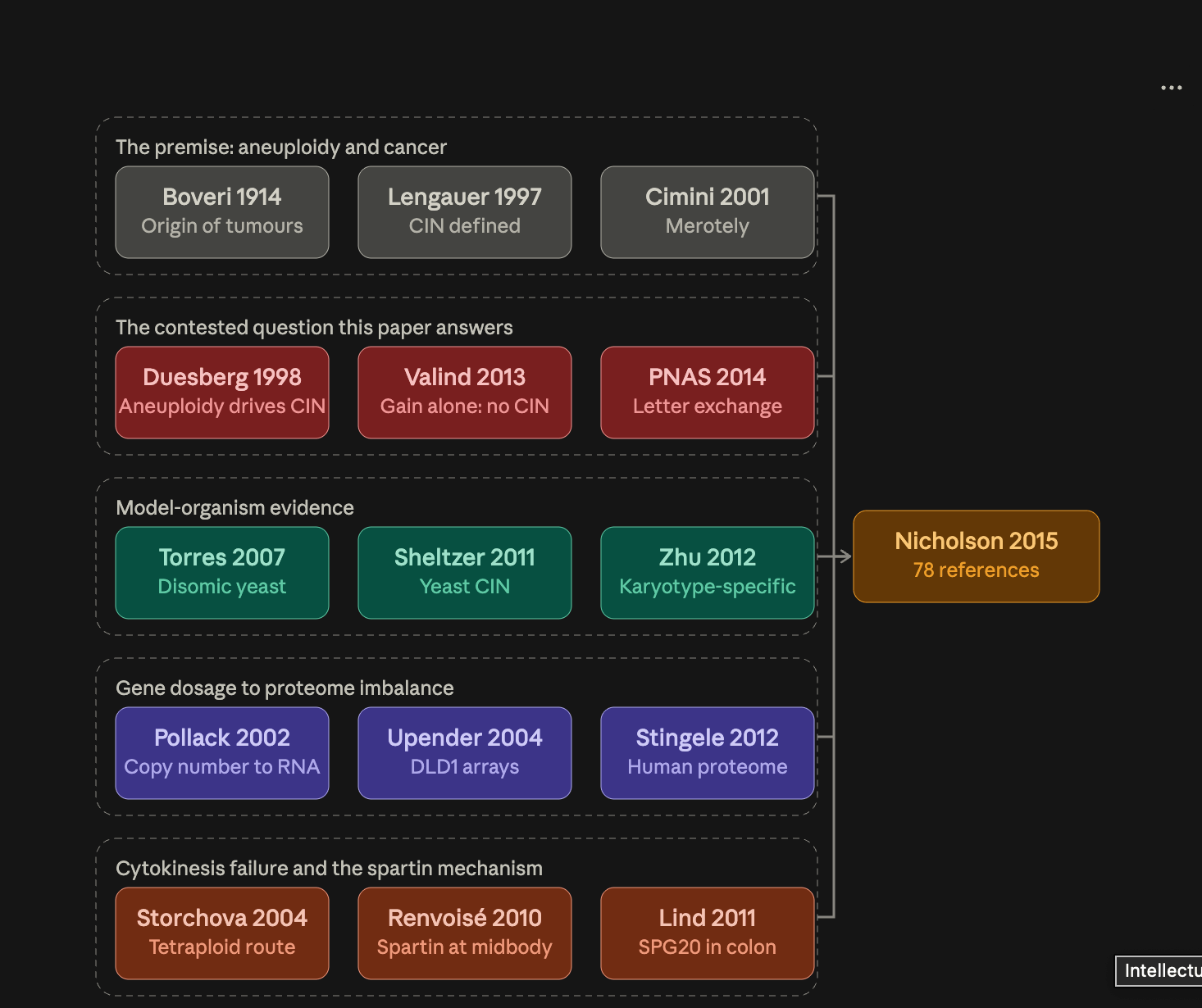
With citation_graph, an agent can start from a paper and follow its references backward through the literature.
That can help identify the earlier methods, theories, evidence, or disagreements that shaped the paper.
Looking backward from a paper: an agent can organize the prior literature into the ideas, evidence, methods, and debates that led to the work.
This kind of analysis can also be run across multiple papers. For example, an agent can identify which references two papers share, helping surface common methodological or intellectual foundations.
Follow a paper forward
The same graph can be traversed in the other direction.
Starting from a paper, an agent can find the later research that cites it and examine how the work developed after publication.
Looking forward from a paper: an agent can trace how later research built on, synthesized, applied, or responded to the original work.
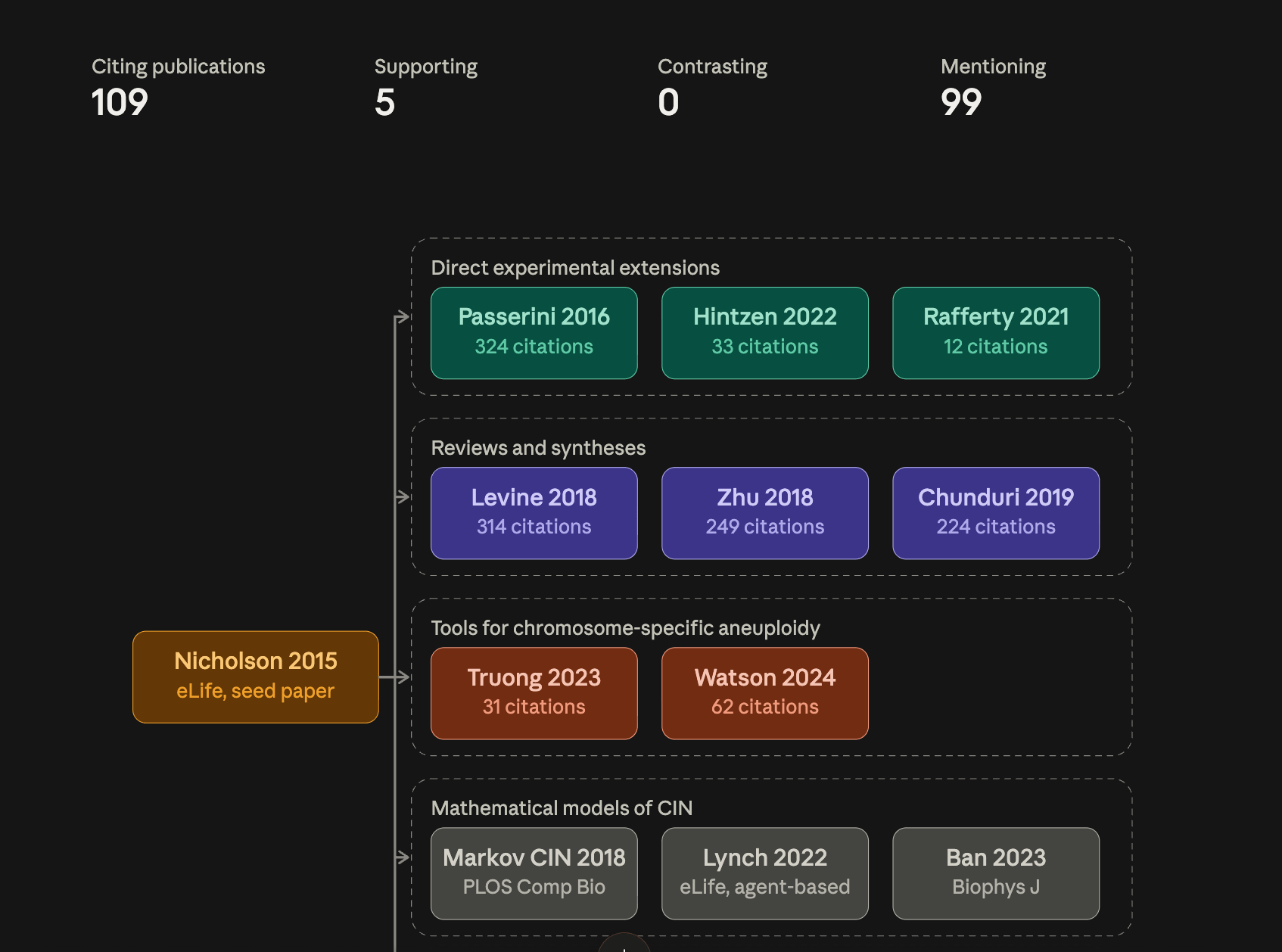
That might include direct experimental extensions, review papers, new methods based on the work, or studies that reached different conclusions.
Add citation context with Smart Citations
A citation relationship alone only tells you that one paper cited another.
Scite can add more context to those relationships using Smart Citations.
Edges in the graph can include whether a citation was classified as supporting, contrasting, or mentioning, along with the section where the citation occurred and, when available, the citation text itself.
So instead of only knowing:
Paper A → Paper B
an agent can sometimes work with a relationship closer to:
Paper A → contrasts → Paper B
That is particularly useful when exploring how a result was received or where disagreements emerged.
The agent can keep going
The useful part of exposing this through MCP is that the citation graph does not have to be the end of the workflow.
An agent can:
- Search for a relevant paper.
- Explore its references or citing papers.
- Identify an interesting paper in the graph.
- Read that paper.
- Traverse from it again.
- Repeat as needed.
The research path can develop based on what the agent finds.
This also enables analyses across groups of papers, such as shared references, common citing papers, co-citation patterns, and bibliographic coupling.
Search, traversal, and full text
We see these as complementary tools.
Search helps an agent find relevant papers.
Citation traversal helps it understand how those papers are connected.
Full text helps it understand what the papers actually say.
Together, they give research agents another way to investigate the literature beyond repeatedly issuing search queries.
citation_graph is available now through the Scite MCP server.