

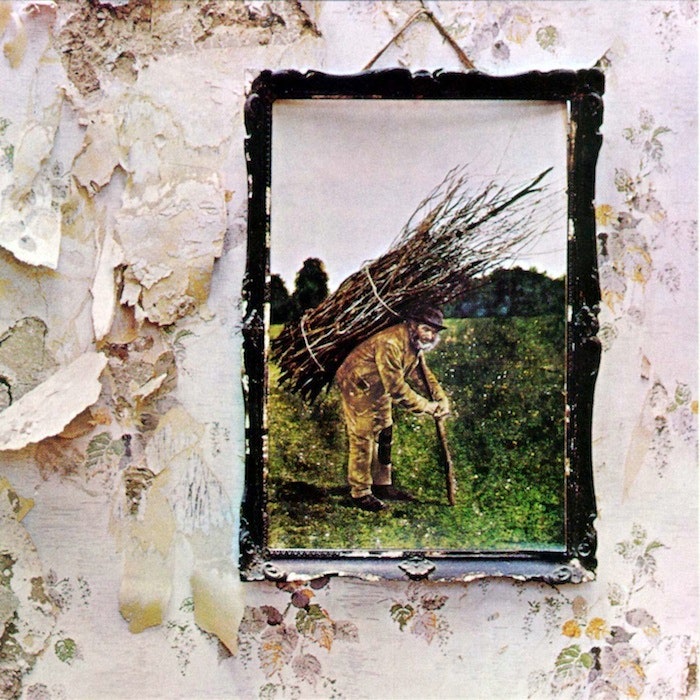
With Led Zeppelin, there was no break-in period, no "early phase" where they figured out what kind of band they wanted to be. They were fully formed from the first repetition of the "Good Times Bad Times" riff, and they powered along through their first half-dozen albums crushing everything in their path. Zep never had their Sgt. Pepper's, their Exile, their Who's Next, because every album was more or less that good—for a while, anyway. This was a band that knew the music it wanted to make and executed it with ruthless precision. The second trio of Led Zeppelin reissues (the fourth album and Houses of the Holy came out last fall, Physical Graffiti this week) found the band inhabiting what Neil Tennant once described (and Tom Ewing fleshed out) as their "imperial phase." Riding on their massive initial success, and pushed even further by the game-changing success of "Stairway to Heaven", everything they tried during these years somehow worked.
If you grew up on classic rock radio, you sometimes felt like you were listening to Led Zeppelin's fourth album on shuffle. It has eight songs, all of them are huge, and one, "Stairway to Heaven", frequently lingers near the top of lists of the Greatest Rock Songs of All Time. Given its place in culture, IV can seem like an album of moments more than songs. Individual parts have been selected, cropped, amplified, and dropped into both songs by other artists and into our collective unconscious. Every song has two or three sections that are instantly identifiable and always seem to be playing somewhere nearby. The circular guitar figure in "Black Dog"; the chiming mandolin in "Going to California"; Bonham's cymbal bashing on "Rock and Roll". It's hard to hear "When the Levee Breaks", by now, and not think of hip-hop. If Led Zeppelin's music formed the DNA of anything that could remotely be called "hard rock," IV is a petri dish overflowing with stem cells. The debut was darker and moodier, II was heavier, and III was prettier, but the fourth album is a triumph of form meeting function.
No score yet, be the first to add.


