





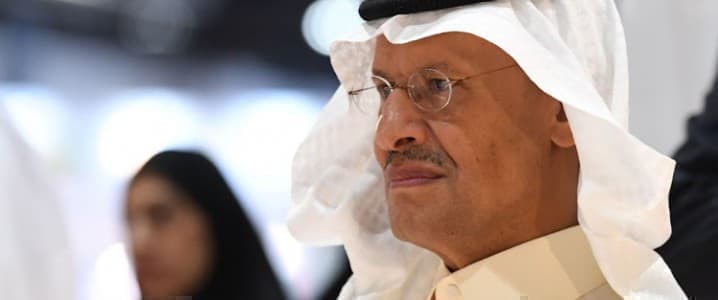
Saudi Arabia did not intend for U.S. oil producers to suffer, Saudi Energy Minister, Prince Abdulaziz bin Salman, said in an interview with a select group of reporters, including Energy Intelligence’s Amena Bakr.
“I made it clear that it was not on our radar or our intention to create any type of damage to their industry. My belief is that once this market stabilizes, and given the nature of shale oil and the shale industry, that they will be able to recover as the market recovers, as the world economy recovers. So I have no single doubt in the mind that in the future, they will rise again from the ashes and thrive and prosper,” the Saudi minister told reporters in the phone interview published by Energy Intelligence on Tuesday.
Saudi Arabia is looking forward to a time when U.S. producers thrive once again in a market with higher oil demand, Abdulaziz bin Salman said.
Before the OPEC+ group agreed on Sunday to reduce oil production, the leaders of the OPEC and non-OPEC producers, Saudi Arabia and Russia, respectively, traded accusations over who is to blame for the previous deal’s collapse. Russia’s President Vladimir Putin said that Saudi Arabia’s oil price war and its readiness to offer steep discounts for its oil was designed to bankrupt U.S. shale. Saudi Arabia responded to that by accusing Russia of breaking up the OPEC+ coalition last month. The words attributed to Putin by media are “fully devoid of truth,” Saudi Minister of Foreign Affairs, Prince Faisal bin Farhan Al Saud, said in a statement in early April.
ADVERTISEMENT
The new OPEC+ deal put the Saudi-Russia feud behind and was an effort to respond to the glut threatening to fill up global storage within weeks as demand crashed amid the COVID-19 pandemic. The nearly 10 million bpd cut would be for just two months—May and June—after which the producers will soften the cuts.
The idea for stretching the cuts over two years came from Saudi Crown Prince Mohammed bin Salman, the Saudi energy minister said in the interview with reporters.
Asked about the Saudi-Russian dynamic in the negotiations leading to the deal, Abdulaziz bin Salman told Energy Intelligence:
“Within a family you get into differences of opinion. I wouldn't call it a feud. It all happens within the family. At the end of the day, a family is a family. When they are confronted with a challenging situation, two parents come out and that sense of band-of-brothers prevails.”
According to the minister, despite disagreements in the course of negotiations, such as the one with Mexico, “I think the first read of that is that Opec-plus is here to stay.”
By Tsvetana Paraskova for Oilprice.com
More Top Reads From Oilprice.com:
- Is Saudi Arabia Restarting The Oil War?
- This Trend Will Reshape Power Generation In The Coming Decades
- The Oil Price Crash Could Trigger A Geothermal Energy Boom









This time the Saudi decision to start an oil price war had nothing to do with undermining US shale oil industry and everything to do with punishing Russia for refusing to agree deeper production cuts by OPEC+ on the 6th of March. It was simply a retaliation by Saudi Crown Prince Mohammed bin Salman against Russia's refusal. Still, the war inflicted huge damage on a US shale oil industry that was already teetering on the brink of collapse because of the coronavirus outbreak.
However, coming against Putin, Prince Mohammed bin Salman found himself between a rock and a hard place with not a hope in hell of winning the price war. He used a call from President Trump as a pretext to call for the urgent OPEC+ meeting on the 9th of April that eventually agreed a 10 million barrels a day (mbd) production cut and ended the price war.
Dr Mamdouh G Salameh
International Oil Economist
Visiting Professor of Energy Economics at ESCP Europe Business School, London