

This homemade pie crust recipe is flaky and tender with a rich, buttery flavor. It’s my go-to pie dough, and I’ve used it for years because it’s reliable and easy to make with simple, natural ingredients, including real butter (no shortening). I’ll also show you how to create a fluted pie rim and how to pre-bake a pie crust when a recipe calls for it.

This post may contain affiliate links. Read my disclosure policy.
Helpful Reader Review
“Best pie crust ever. So easy! I have made fruit pies, as well as chicken pot pies and used it for a veggie quiche; delicious.” – Monique ★★★★★
Pie Crust Video
Watch my video tutorial and see how easy it is to make a pie crust from scratch. It comes together in minutes, and you will be cranking out those homemade pie crusts in no time.
Homemade Pie Crust
This pie dough recipe yields 2 single crusts or 1 double pie crust. Homemade pies are irresistibly delicious, and you can always tell when a pie is homemade by the crust. An all-butter pie crust has a melt-in-your-mouth buttery taste and delicate texture. An Apple Pie or Cherry Pie that is made completely from scratch can’t be beat!
Knowing that I made the pie dough always makes me feel like a real ‘Martha Stewart’ (or should I say ‘Natasha’s Kitchen’… I couldn’t resist)!
P.S. They also keep really well in the refrigerator and freezer if you want to get ahead on your holiday Chicken Pot Pie or Dutch Apple Pie. I always love having pie dough on hand for easy homemade pies.

Ingredients for Pie Dough
It doesn’t get any easier than this pie dough, and you probably already have everything you need for a homemade pie crust: all-purpose flour, sugar, salt, unsalted butter, and water.
The butter should be COLD, straight from the fridge, so you don’t have to plan ahead to make pie dough. Also avoid handling the butter too much, which can soften it. You can pre-dice the butter and put it back in the refrigerator to keep it chilled until needed.

How to Make Pie Dough in 4 Easy Steps
This process is super easy in a food processor but you can also use a pastry blender (see instructions below).
- Measure flour correctly then in a food processor, pulse together flour, sugar and salt.
- Add COLD butter, diced into 1/4″ pieces, and pulse until coarse crumbs and some pea-sized pieces form. The mixture should remain dry and powdery.
- Add 7 Tbsp ice water and pulse just until moist clumps/ small balls of dough form. You’ll know you’ve added enough with the pinch test – pinch a piece of dough between your fingers, and if it sticks together, it’s good. If your dough is too crumbly, add more ice water, 1 tsp at a time. Be careful not to add too much water, or the dough will be sticky and difficult to roll out.

- Transfer the dough to a clean work surface and gather it together into a ball. Resist the urge to knead the dough and avoid overmixing. Fold/knead the dough over itself just enough for it to hold together. You should still see crumbles or pockets of butter in the dough, which create a flaky dough after it’s baked. The dough should not be smooth. Divide the dough in half and flatten into 2 disks. Cover with plastic wrap and refrigerate for 1 hour before using.

Can I use a Pastry Cutter Instead?
Yes! You can cut the butter in by hand with a pastry cutter. Two forks work too, but in my opinion they make the process slow and annoying.
Whisk the flour, sugar, and salt in a mixing bowl. Add diced cold butter and lightly toss to coat in flour. Use the pastry cutter to cut the butter into the flour until the mixture looks like a coarse meal with pea-sized butter crumbles. Add the ice water, 1 Tbsp at a time, stirring with a firm spatula with each addition. Stop adding water when you see large clumps forming.
How to Make a Pie Crust
Once your dough is chilled, you can roll and form your pie crust.
- Dust the work surface with flour and roll a single crust into a 12″ circle. Wrap your pie dough around your rolling pin. If it sticks to the work surface, use a food scraper or spatula to loosen it as you go.
- Carefully transfer crust to 9″ pie dish and unroll it into the pan. Gently press the dough down to line the pie dish. Tuck excess dough underneath itself to make a thick double-layered edge (no waste!).

How to Crimp and Flute Pie Crust
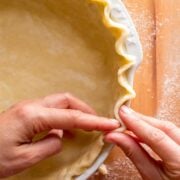
To form a fluted pie rim, hold your thumb and index finger an inch apart on the outside edge of the crust and press between them with the index finger of the other hand. Move around the edges of the pan repeating the motion to create a fluted rim. If you want to get creative with the top of a pie, check out my tutorial on How to Make a Lattice Pie Crust.

Make Ahead and Storage
- Refrigerate pie dough up to 3 days ahead. Allow it to soften slightly at room temperature before rolling it out.
- To freeze pie dough: Wrap and seal airtight, then freeze up to 3 months. Thaw completely in the refrigerator prior to rolling.
Pie Crust Troubleshooting
- Dough is too crumbly: It needs a little more water. Add ice water 1 tsp at a time and pulse (or stir) just until a pinch of dough holds together.
- Dough is sticky: It got too much water or the butter got too warm. Dust lightly with flour and chill the disks before rolling.
- Dough is too hard to roll: Pie dough firms up when refrigerated longer than an hour because of the butter. Let it rest at room temperature for 10-20 minutes, or until it rolls easily.
- Crust is tough or dense after baking: This is usually from overmixing, which develops gluten. Mix only until it holds together. You should still see pieces of butter in the dough.
- Crust shrinks in the pan: Don’t stretch the dough to fit the dish. Ease it in gently and chill the lined crust until ready to use.
How to Pre-Bake Pie Crust (Blind Bake)
Some recipes, such as Pumpkin Pie or Quiche Lorraine, call for a pre-baked pie crust, and this is how you blind bake:
- Form your edge: The easiest methods are crimping the rim with a fork or making a fluted rim (see tutorial above). Freeze the crust for 30 minutes to help the crust bake more evenly without sliding down the sides. Meanwhile, preheat your oven to 425˚F.
- Bake with weights: Line the center with a 9-10″ ring of parchment paper and fill 2/3 full with pie weights (*see photo below). Bake for 17 minutes, until the edges are golden.
- Finish without weights: Remove the parchment with weights, prick the bottom of the crust all over with a fork and bake another 5 minutes or until golden and the bottom is dried out. Let the crust cool to room temperature.

What Can I Use Instead of Pie Weights?
No pie weights? Fill the parchment-lined crust with one of these:
- Dry Raw Beans: Can be used as pie weights again and again, but don’t cook with them afterward.
- Uncooked Rice: It gets lightly toasted and can be cooked afterward, which is great in pilaf.
What is your favorite pie to make with this crust? Let me know in the comments below.
Easy Pie Crust Recipe

Ingredients
- 2 1/2 cups all-purpose flour, plus more to dust, *measured correctly
- 1/2 Tbsp granulated sugar
- 1/2 tsp sea salt
- 1/2 lb COLD unsalted butter, (2 sticks) diced into 1/4" pieces
- 7 Tbsp ice water*, or more as needed
Instructions
- Place flour, sugar and salt into the bowl of a food processor and pulse a few times to combine. You can also use a pastry blender* to make the dough.
- Add cold diced butter and pulse the mixture until coarse crumbs form with some pea-sized pieces then stop mixing. Mixture should remain dry and powdery.
- Add 7 Tbsp ice water and pulse just until moist clumps or small balls form. Press a piece of dough between your fingertips and if the dough sticks together, you have added enough water. If not, add more water 1 teaspoon at a time. Be careful not to add too much water or overmix as this can make the dough sticky and difficult to roll out.
- Transfer dough to a clean work surface, and gather dough together into a ball – Fold/knead the dough over itself just enough for it to hold together. It should not be smooth and DO NOT overmix. Divide dough in half and flatten to form 2 disks. Cover with plastic wrap and refrigerate 1 hour before using in recipes that call for pie crust.
Notes
Nutrition Per Serving
This recipe was adapted from the Joy of Cooking and The Bon Appetit Cookbook. They are both amazing general reference books that I have had in my kitchen for years. Highly recommend! Now go forth and make a homemade pie. You can DO THIS!!
Recipes to Make with This Pie Crust

The BEST Apple Pie Recipe

Mini Pumpkin Pies (VIDEO)

Apple Galette

Peach Galette Recipe (with Video)

Blueberry Pie Recipe (VIDEO)
