
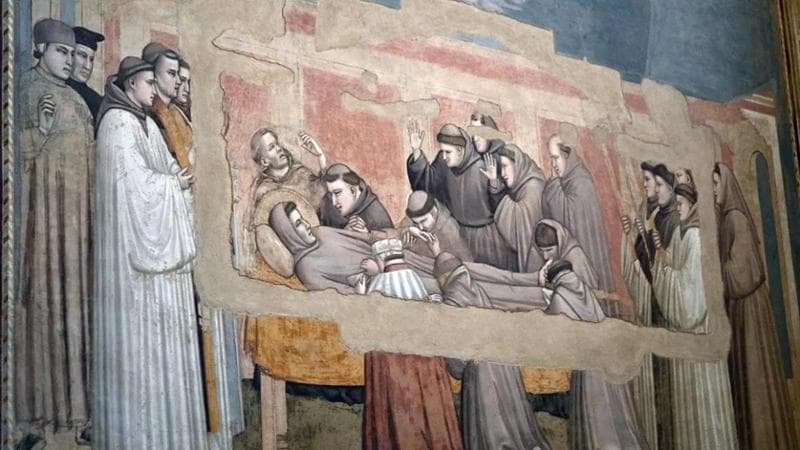
FLORENCE – It is as though, after seven centuries, Giotto has reclaimed the full extent of his space. A space born of the encounter between the stone walls of the Bardi Chapel, in Florence’s Basilica of Santa Croce, and the world the Italian painter created upon them.
After four years of work, the cycle of frescoes depicting scenes from the life of St Francis is once again on view. The restoration has cleaned and conserved the masterpiece, offering fresh insights into Giotto’s work. The most significant revelation is the way he constructed space.The project was carried out by the Opificio delle Pietre Dure, Florence’s renowned conservation and restoration institute, commissioned by the Opera di Santa Croce and supported by the Italian Ministry of Culture, Fondazione CR Firenze and ARPAI, among others.
Costing €1 million, the restoration was completed in the year marking the 800th anniversary of the death of St Francis of Assisi. It has brought back into view six scenes from the saint’s life, based on the Legenda Maior by Bonaventure of Bagnoregio: from Francis’s renunciation of his father’s wealth to the approval of the Franciscan Rule, his encounter with the Sultan and his death, culminating in his posthumous appearance to Brother Augustine and Bishop Guido.
“This was a necessary restoration, and by no means a straightforward one,” explains Emanuela Daffra, superintendent of the Opificio delle Pietre Dure.
Nearly 70 years after the previous restoration, undertaken by the painter and restorer Leonetto Tintori, the devastating flood of the River Arno in 1966, pollution, dust, the tourism boom and climate change have all accelerated the deterioration of the frescoes.The paintings themselves have had a turbulent history, from being whitewashed in the 18th century and the subsequent installation of two cenotaphs to their rediscovery in the 19th century by the restorer Gaetano Bianchi.
They also reveal Giotto’s sophisticated technique.
Alongside traditional fresco painting, he made extensive use of a secco techniques, applying paint to dry plaster. This allowed him to achieve richer colour effects, but also made the paintings more vulnerable to deterioration.
The freehand drawings
In many cases, however, the loss of pigment has made it possible to observe up close the master’s working methods. Freehand drawings, incisions, lines snapped onto the plaster using pigment-soaked cords and other preparatory marks — all digitally mapped — reveal a meticulous and surprisingly modern approach to constructing space.
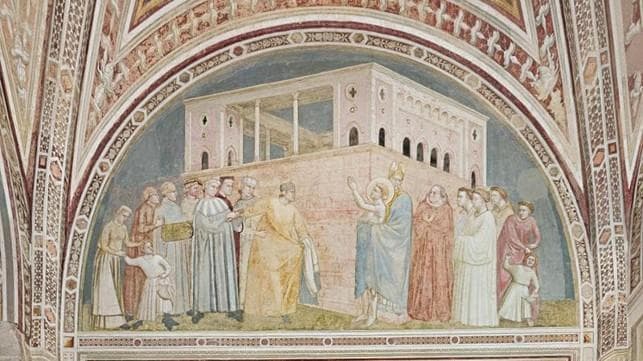
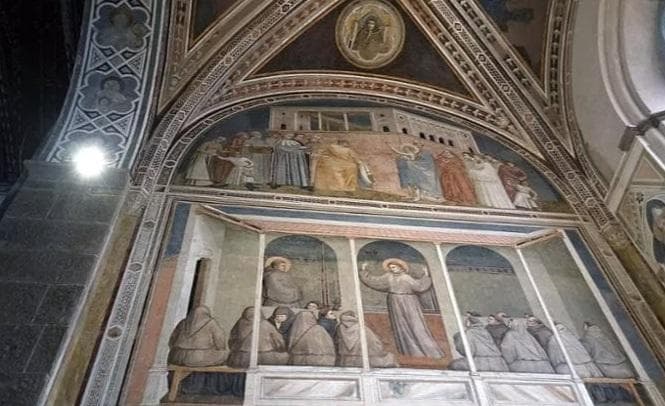
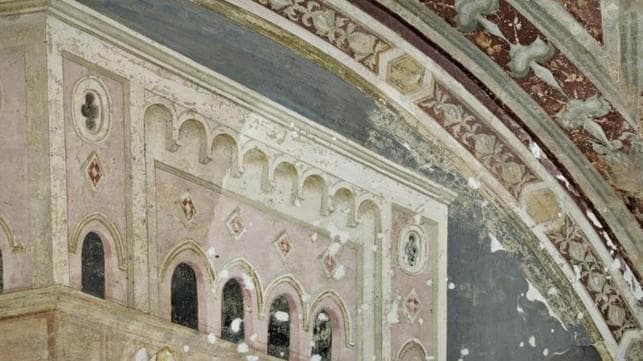
Monumental illusionistic architecture is superimposed on the chapel’s actual architecture. The settings of the various scenes become carefully constructed spaces in which figures, gestures and glances each serve a precise narrative purpose.
It is above all this architectural framework that the restoration has brought back into focus, making it legible once again through subtle but distinguishable interventions.
A clearer view of the masterpiece
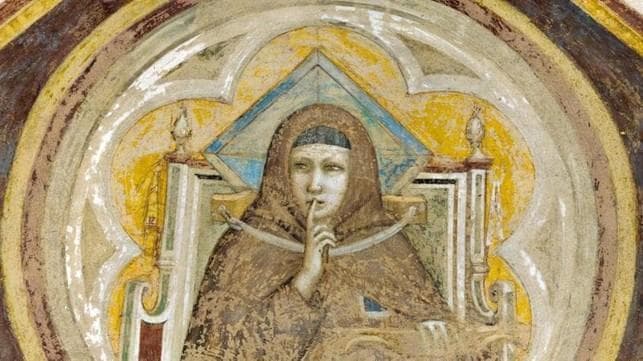
The approximately 5,000 small areas of missing paint scattered across the surface were treated individually, using different techniques to give visitors the clearest possible view of the frescoes while respecting the work’s history.The chapel’s vault, which had received less attention during previous restorations, proved something of a revelation. Cleaning, including the use of laser technology, has recovered almost-lost details in the depictions of the Franciscan virtues, particularly Obedience and Chastity. The restoration has also confirmed earlier findings.
It is now clearer than ever that Giotto was not working alone, but directing a team. The different hands visible in the frescoes reveal the Bardi Chapel as a place of artistic innovation, where Giotto and his assistants experimented with techniques and approaches that would leave a lasting mark on the history of painting.
As Daffra observed, every restoration also opens a window onto the future. The work in the Bardi Chapel has done more than give us a clearer, more sharply defined picture of Giotto’s achievement. Above all, it has yielded a wealth of data that will provide material for further research.
The translation of this article was reviewed by a Language Service Provider