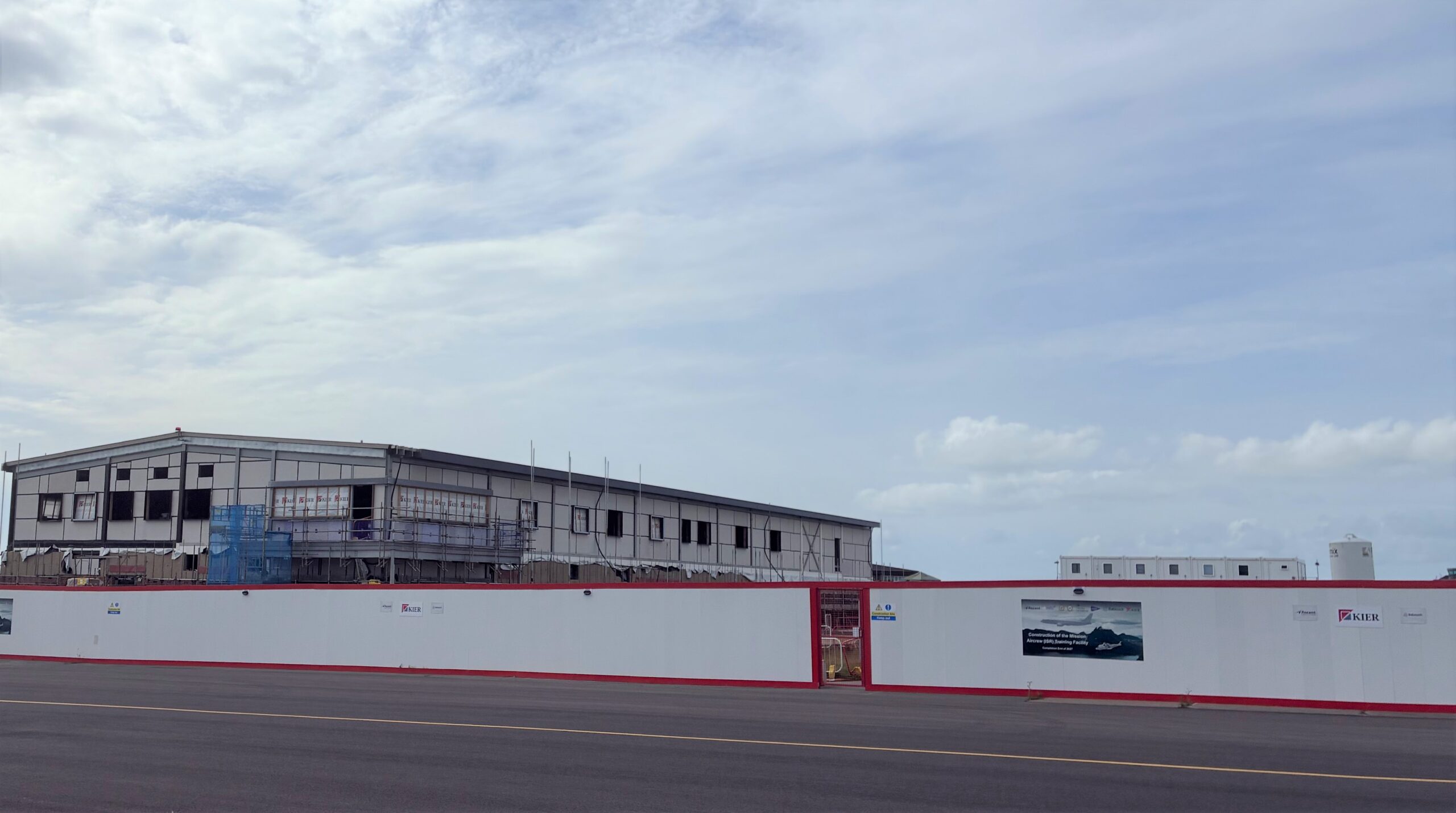
It won’t be long until the first UKMFTS trainees begin our new mission aircrew training system, and building work on new infrastructure at RNAS Culdrose and RAF Cranwell is progressing well.
At Culdrose, we are working towards building completion in the spring. The project continues to progress well, with the ground floor largely skimmed and the first-floor partitions continuing. The brickwork is now up to the top of the windows on the ground floor. The glazing has commenced and much of the glass is in with the building being weather tight. The externals continue at a steady pace with the removal of legacy structures in readiness for the commencement of the hard and soft landscaping.
The new operational support base has been named the St Merryn Building. St Merryn is a tiny, picturesque village in North Cornwall that has been associated with 750 NAS since RNAS St Merryn airfield was home to the reforming of the Squadron in 1952.
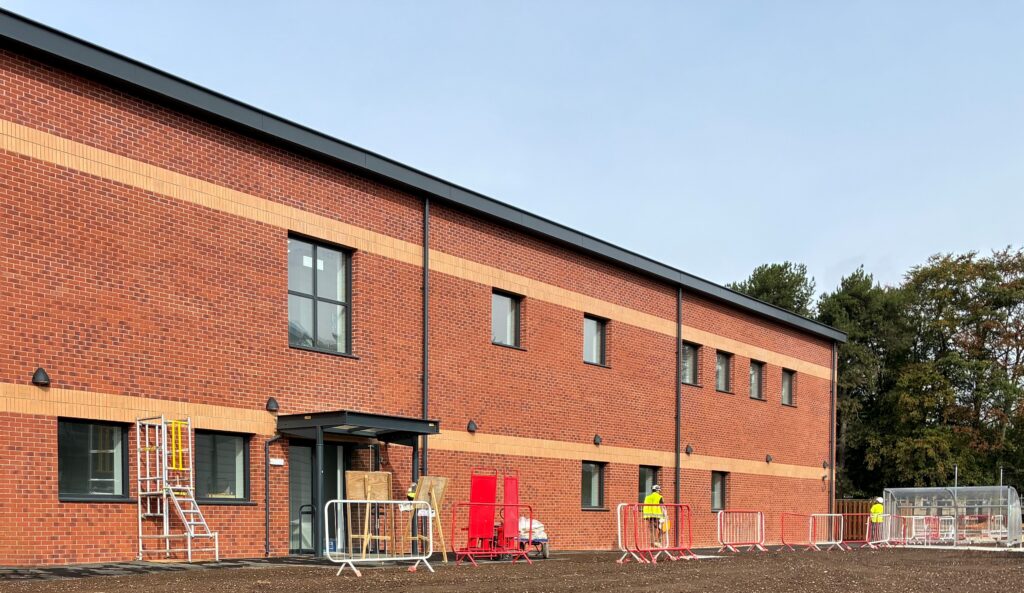
At Cranwell, the construction phase is fast approaching conclusion, with Babcock International Group and Kier Construction starting to demobilise and reinstate the area.
The new Hay building honours Air Cdre Nick Hay, who was the ISTAR Fce Cdr from 2018 to 2022, during which time he was a staunch supporter of ISTAR MA.
The new mission aircrew training system – the Future ISTAR (Intelligence, Surveillance, Target Acquisition and Reconnaissance) and Rear Crew Training System (FIRCTS) – will bring substantial advances to training at both Culdrose and Cranwell, enhancing the UK’s key defence capabilities and investing in local communities. The massive scaling of this service will result in a four-fold increase in critically important mission aircrew trainees to 140 per year for the Royal Navy and RAF.
It will deliver the latest training advances through UKMFTS, to meet growing ISTAR and UAS demands of the military frontline.