In honor of Uemura's career and his lasting impact on the game industry, we're republishing this 2013 piece we ran on the Famicom's 30th birthday, diving deep into the technical details of the system and exploring its history and legacy.
We’re right on the cusp of another generation of game consoles, and whether you’re an Xbox One fanperson or a PlayStation 4 zealot, you probably know what’s coming if you’ve been through a few of these cycles. The systems will launch in time for the holidays, each will have one or two decent launch titles, there will be perhaps a year or two when the new console and the old console coexist on store shelves, and then the “next generation” becomes the current generation—until we do it all again a few years from now. For gamers born in or after the 1980s, this cycle has remained familiar even as old console makers have bowed out (Sega, Atari) and new ones have taken their place (Sony, Microsoft).
It wasn’t always this way.
The system that began this cycle, resuscitating the American video game industry and setting up the third-party game publisher system as we know it, was the original Nintendo Entertainment System (NES), launched in Japan on July 15, 1983, as the Family Computer (or Famicom). Today, in celebration of the original Famicom’s 30th birthday, we’ll be taking a look back at what the console accomplished, how it worked, and how people are (through means both legal and illegal) keeping its games alive today.
From Japanese beginnings to American triumphs
The Famicom wasn’t Nintendo’s first home console—that honor goes to the Japan-only “Color TV Game” consoles, which were inexpensive units designed to play a few different variations of a single, built-in game. It was, however, Nintendo’s first console to use interchangeable game cartridges.
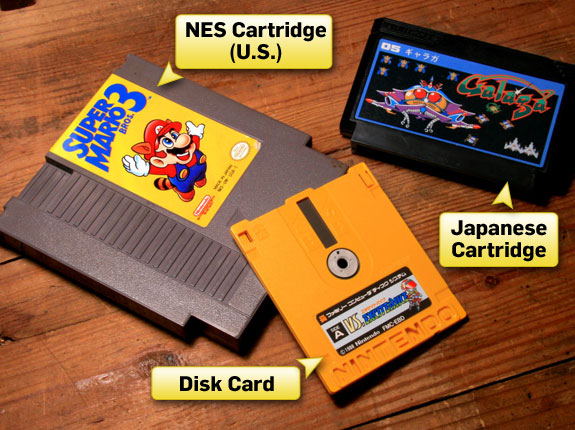
The original Japanese Famicom looked like some sort of hovercar with controllers stuck to it. The top-loading system used a 60-pin connector to accept its 3-inch-high, 5.3-inch-wide cartridges and originally had two hardwired controllers that could be stored in cradles on the side of the device (unlike the NES’ removable controllers, these were permanently wired to the Famicom).








 Loading comments...