Skip to content
pros and cons

Apple brings Final Cut Pro and Logic Pro to iPad as $50-per-year subscriptions

Logic Pro will run on A12 or newer chips, while Final Cut requires an M1 or M2.

Andrew Cunningham – | 191
Editing a video in Final Cut Pro for the iPad with an Apple Pencil. Credit: Apple
Story text

Apple announced today that it’s bringing its flagship professional creative apps to the iPad for the first time. The Logic Pro audio-editing software and Final Cut Pro video-editing software are making the jump to the iPad with multi-touch-optimized interfaces and Apple Pencil support.

Both apps will be available on the App Store starting May 23 for either $5 per month or $50 per year. Each will also have a one-month free trial available.

Both apps have more stringent system requirements than the GarageBand and iMovie apps. Logic Pro will run on any iPad with at least an A12 Bionic chip, including the 8th-generation iPad, the 3rd-generation iPad Air, the 5th-generation iPad mini, and newer models. Final Cut Pro is more demanding and requires an iPad Pro or Air with an M1 or M2—presumably, it’s the small amount of RAM included with older iPads that keeps them from running software that much slower Macs have managed to run for years.
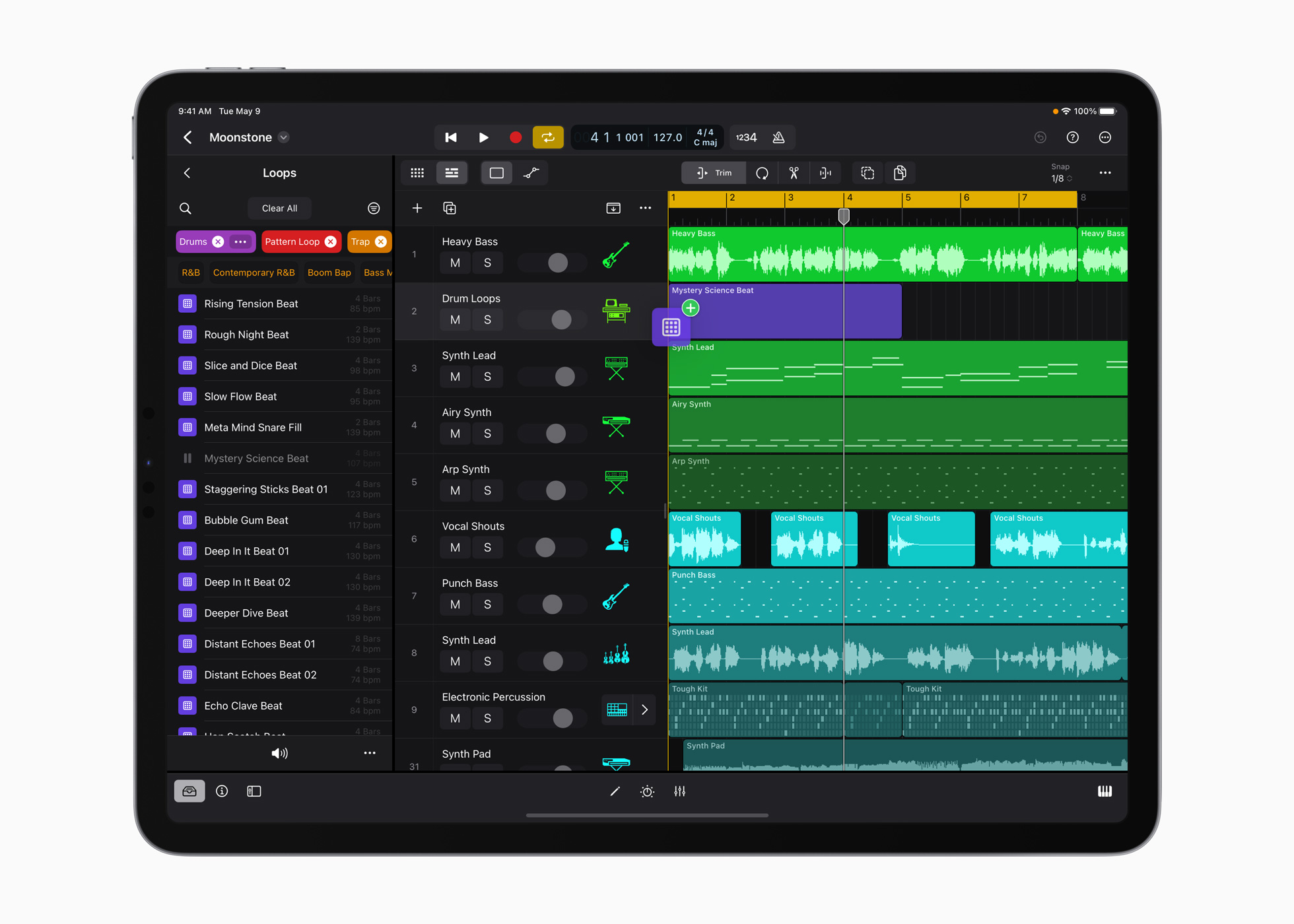

Logic Pro running on an iPad. Credit: Apple

The iPad versions of Logic Pro and Final Cut Pro do support some level of cross-platform compatibility with the macOS versions, but barriers remain. Logic Pro projects support “roundtrip capabilities” that make it possible to use Logic Pro for Mac to open and edit projects created on an iPad and vice versa. Final Cut Pro projects created on an iPad can be exported to Final Cut Pro for Mac, but it doesn’t seem possible to export projects from the Mac to an iPad instead.

If you’ve created projects with the iOS versions of iMovie or GarageBand, you can also import them into Final Cut Pro or Logic Pro for the iPad to keep working on them with the more advanced apps.

Final Cut Pro and Logic Pro are some of Apple’s last paid software after the company made macOS upgrades free a decade ago and followed suit with the old iWork and iLife app suites a few years later. Unlike the iPad versions, the Mac versions of Logic Pro and Final Cut Pro X are still available for one-time payments of $200 and $300, respectively.

Ars Technica may earn compensation for sales from links on this post through affiliate programs.

Listing image: Apple

Photo of Andrew Cunningham
Andrew Cunningham Senior Technology Reporter
Andrew is a Senior Technology Reporter at Ars Technica, with a focus on consumer tech including computer hardware and in-depth reviews of operating systems like Windows and macOS. Andrew lives in Philadelphia and co-hosts a weekly book podcast called Overdue.
191 Comments