Skip to content
Features

Citizendium: building a better Wikipedia

Ars Technica takes a look at Citizendium, Larry Sanger's effort to build a …

Nate Anderson – | 0
Story text

Gentle expert guidance

When you're a cofounder of Wikipedia, what do you do for an encore? If you're Larry Sanger, the answer is simple: you build another Wikipedia. A better one.

This is Sanger's dream as he ramps up the Citizendium project, an ambitious undertaking that aims to reform the "immature" Wikipedia community and create a different sort of place, one where real-world accomplishments are rewarded and experts have a special role to play. Citizendium has as its goal nothing less than the creation of a comprehensive and dependable encyclopedia, the sort of place where readers can put their trust in approved articles and children can browse without stumbling upon, for instance, "Hybristophilia."

"Wikipedia has accomplished great things, but the world can do even better," Sanger said when he launched the pilot version of the "Citizen's Compendium" (the genesis of the name "Citizendium") on October 17, 2006. With experts leading the way, the new site would "improve upon Wikipedia's extremely useful, but often uneven work. The result will be not only enormous and free, but reliable."

Sanger, who says that he "literally quiver[s] with excitement" when he thinks about the possibilities of open and collaborative content, wants to make it quite clear that he is not denigrating the wisdom of the unwashed masses. Citizendium will not be a dictatorship of experts but will create a space for "gentle expert guidance" that Wikipedia does not. Sanger summed up his approach in an October speech at SDForum in San Jose, arguing the thesis that "experts can play special roles in Web 2.0 projects without 'breaking' such projects."
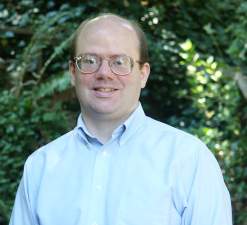

Larry Sanger

So can Citizendium do to Wikipedia what Wikipedia did to Britannica? At the moment, only eight Citizendium articles are listed as "approved" by editors. One is on Barbara McClintock; another covers "wheat." Clearly, work remains.

I talked with Sanger recently about his vision for the Citizendium. Despite a head cold, he was courteous, articulate, and utterly convinced that "gentle expert guidance" could create an encyclopedia capable of whipping Wikipedia in a bar fight (not that the more mature Citizendium community would ever engage in something as juvenile as a bar fight). But where had the idea for Citizendium come from the first place, and why was a Wikipedia cofounder so down on that project's prospects?

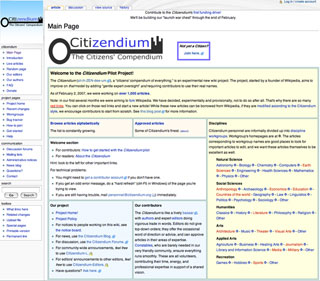
As Sanger tells it, the turning point came when he received a phone call from a man accused of murder.

"Serious and endemic problems"

The caller was John Seigenthaler, a journalist and former Robert Kennedy aide who had recently complained about a libelous Wikipedia entry accusing him of murder. The claim was false, of course, but it had survived on Wikipedia for more than 100 days.

The material was traced back to one Brian Chase of Nashville, who had added it as a "gag." Seigenthaler was not amused and began calling around to find out exactly how such an accusation had been published for so long on such a prominent website. One of the people he reached was Larry Sanger.

Sanger was laid off from Wikipedia back in 2002, and soon stopped all active involvement with the project. He returned to teaching philosophy and playing the fiddle, and he dabbled with ideas for future open content projects, including one that approximated the Citizendium. And then John Seigenthaler called him, looking for answers.

"When Seigenthaler called, I was already resigned to the necessity of making a competitor to Wikipedia," Sanger says. "The effect of Seigenthaler's call was to make me feel to some extent personally responsible for the injustice that Wikipedia was causing, which made my motivation only stronger. When after six to nine months I saw that Wikipedia wasn't going to make any significant changes, it became clear that it was on me to organize a better alternative, if I could."

In September 2006, Sanger issued his manifesto, a document called "Toward a Compendium of Knowledge." In it, he laid out the "serious and endemic problems" that he saw in the Wikipedia model:

  • The community does not enforce its own rules effectively or consistently
  • Widespread anonymity has a problem—it's attractive to people who want to cause trouble, undermine the project, or simply troll
  • The community has developed an insularity that makes it difficult for people who are not already part of the community to get on board
  • The "arguably dysfunctional community" is not attractive to traditional experts such as academics

Sanger had hoped that Wikipedia would clean up its act, and he was all but certain that the encyclopedia would eventually put an expert review system in place. After Seigenthaler's call, Sanger found the Wikipedia community's response "completely unacceptable" and concluded that they were no longer able to change in important ways.

Sanger took a risk in the fall of last year. He left his job at the Digital Universe Foundation, where he had been working on other open content projects, and launched Citizendium as a pilot project. By the end of January 2007, the project had signed up more than 500 individually-screened people to work as authors and editors, and then opened its doors to public participation (though it's still officially in the pilot phase, anyone can now sign up for an account and start writing).

The theory of "gentle expert guidance" faced its first major test.

PDF Download the PDF
(This feature for Premier subscribers only.)

Of biographies and real names

Although it works much like Wikipedia and runs on the same MediaWiki platform, Citizendium has some different ground rules. For one thing, everyone who writes and edits articles must sign up for an account using their real names. Anonymous edits are verboten, and aliases are only allowed in unusual circumstances (think political dissidents). The goal, apparent in many of Citizendium’s policies, is to encourage accountability. The project wants to foster “a culture of real-world, personal responsibility” rather than the anonymous free-for-all that can sometimes characterize Wikipedia.

Contributors are required to post a short biography on their user pages, complete with links to publicly verifiable information such as papers they have published or school affiliation. Those seeking to become “editors” use their biography as credentials; only those who can prove that they have real-world expertise in a certain field are eligible for the title of “editor.”

“Editors” cannot claim control of articles, they cannot act like dictators, and they generally work alongside the “authors.” What they can do, though, is mark articles as “approved,” a designation which means that the article is judged reliable. They can also arbitrate disputes that crop up on “talk” pages in their discipline.

The third class of Citizendium citizens are the “constables,” those who enforce the community’s rules. They have the job of booting “the project’s inevitable, tiresome trolls,” in Sanger’s words, though they will not generally have editorial powers.

The goal is a mature community, accountable for its words, that produces an “approved” body of vetted work that can be relied on in a way that Wikipedia cannot. But because Wikipedia has already generated such a massive amount of content, it seemed at the start of Citizendium that the best approach would be to start with a “fork” of Wikipedia’s content that would improve over time.

Wikipedia’s generous license allowed this, so Citizendium launched with a port of Wikipedia’s million-plus entries. Contributors went to work on them, trying to ferret out misleading statements, insert additional information, and up the writing level of the entries. But faced with the task of working on more than one million pieces of text, the nascent community found it difficult to get a sense of its own progress. The work of Citizendium contributors was dwarfed by the massive unedited Wikipedia material, and what had initially seemed like a great idea that could kickstart the project now began to look like a mistake.

Sanger thought about the problem for some time. In January, after consultation with community members, a decision was reached: the Wikipedia material would be removed. Citizendium would build its encyclopedia from the ground up.

The Great Unforking

It was a bold course correction for a young project, and Sanger stresses that it is still just an "experiment," but it is an experiment that he believes will provide self-definition to the new community.

"When you’ve got a project as enormous as Wikipedia, if you try to start a new community using the content derived from the pre-existing project, the new community is affected by the mere existence of the content," he says. "The content encodes the rules of the community that you’ve borrowed the content from."

Citizendium does not want to follow those rules. Sanger worries about the "navel-gazing" that goes on over at Wikipedia and argues that the Wikipedia community "has a bit of an insularity to it. We will be more open and inviting to most people."

He cites Wikipedia’s habit of using templates on articles as a stylistic decision that Citizendium wants to avoid, and there are many others. But it’s difficult for the new community to create its own rules and norms when its content remains imported from Wikipedia.

So Wikipedia material was pulled out of Citizendium, leaving only articles which Citizendium contributors had worked on. Citizendium instantly shrank from one million entries to one thousand. Sanger believes that this was a liberating decision, rather a than discouraging one that only shows how much work is left to do. Having only a few articles gives focus to the project, he says, and actually provides a better sense of progress; it’s immediately obvious to contributors how much new work is underway.

Aetheris ceratophora meets The Jetsons

One of the things made clear by the Great Unforking is that someone involved with Citizendium loves snakes. Of the 350 current articles that exist in the A-E section of the encyclopedia, a full 45 of them concern snake varieties. Thus, if you don’t know your Atheris ceratophora from your Atheris nitschei rungweensis, Citizendium is a good place to start.


Atheris ceratophora,

aka, Eyelash Bush Viper

The snake material comes courtesy of a Netherlands-based IT consultant who is a "serious amateur herpetologist with a keen interest in viperid snakes." The fact that one can look up the real name and biography of an article author does give Citizendium a different feel from Wikipedia, just as Sanger hoped it would. He talks about how "cool" it is to "look down the recent changes page and there’s nothing but real name after real name"—and it is cool. Citizendium feels like a collaboration between real people, all scattered about the globe but interested in creating a body of knowledge together. Wikipedia feels… different. The contributors, hidden by screen names, feel less real and less accountable.

On the other hand, those often-anonymous Wikipedia contributors have created an almost unbelievable repository of pop culture material that complements the traditional encyclopedic subjects. If you want to know more about River City Ransom or The Jetsons, Wikipedia is your place. If Citizendium seems like the serious uncle, Wikipedia is the fun-but-slightly-disreputable cousin who takes you to the amusement park to drink beer and ride the Tilt-a-Whirl.

This may sound like flippancy, but it’s not. Wikipedia is a fun place to hang out, to learn at least a little about the craziest variety of things. Will Citizendium’s scope be that broad, or will it limit itself to the interests of the academics who will (hopefully) populate the community?

"Speaking for myself, I’m an inclusionist," says Sanger, who says that he is open to anything—almost. Decisions about what to include will be up to the community, of course, but the Charter that guides Citizendium will include some statement about "family-friendly content." The goal is to make Citizendium a safe resource for teachers to recommend and for students to access in schools. While some sexual topics will be covered, these will be "very tasteful and there’s not going to be graphic photographs."

Progress!

Citizendium currently has over 500 participants, most of whom have been individually screened. Growth has been sometimes erratic; Sanger says that the site gained 50-75 contributors on a single day after being featured on Slashdot. Edits have now topped 500 per day, which Sanger says compares favorably with the earliest days of Wikipedia.

Progress may look slow from the outside, with less than ten articles "approved" by editors so far, but Sanger points out that the approval process didn’t begin until December, and that plenty of other articles are being worked on. In a few months, Citizendium will emerge from its private phase and really begin to publicize itself, but the date for such a move has not yet been set. The project currently runs on a shoestring budget, and going public depends in large part on whether it can raise the necessary funds or secure the equipment needed to handle the traffic load.

The worry is that a site which collapses beneath a crush of visitors is unlikely to bring many of them back for a second look. When Citizendium initially made its sign-up process automatic, the wiki was unreachable for six hours. Before making a public splash, Sanger hopes to have 16 servers in place, though he acknowledges that Citizendium cannot yet afford this.

The project has been supported by a couple of key grants from foundations, and it also accepts donations from users. Citizendium has recently been granted nonprofit status by affiliating with the Tides Center as one of their projects, but hopes to gain its own nonprofit declaration shortly.

But apart from the amount of donations and the number of edits, Sanger says that the most exciting aspect of the project’s growth has been the realization that editors and authors can in fact work together in a civil way. "The main reason there are so many edit wars on Wikipedia is that there are so many immature people involved who have never really learned the values of collegiality," he says, but notes that the Citizendium community has behaved "extremely well" so far.

To Sanger, this is vindication of his thesis that experts still have a place in the egalitarian Web 2.0 world. But what if Wikipedia comes to the same realization? If Wikipedia were ever to adopt the core Citizendium policies, or even puts some sort of article approval mechanism in place that can help ensure accurate information, Citizendium could be in trouble. When I ask Sanger about the possibility that such a move will make his work irrelevant, he pauses. "Good question; maybe," he says, before arguing that Wikipedia is no longer capable of making that sort of structural change.

No dictator for life

Sanger has no plans to head the Citizendium project indefinitely; he has already announced his plan to step off the leadership team in two or three years. But what will the project look like at that time?

If it’s still around, Citizendium will probably bear little resemblance to the tiny encyclopedia that exists today. Right now it’s a resource for eight approved articles on Barbara McClintock, Biology, Chiropractic, Horizontal gene transfer, Metabolism, RNA interference, Vertebral subluxation, and Wheat. To progress from this to a world-renowned resource that can surpass Wikipedia sounds almost like a pipe dream when you consider the size difference between the two projects—and yet even Wikipedia had to build itself from nothing.

Citizendium actually launches with a head start; though Wikipedia content has been "unforked" from the encyclopedia, users who want to create a new article have the option to import the current Wikipedia text to use as a base.

Sir Thomas Browne, in his famous Pseudodoxia Epidemica, records an old legend concerning snakes. "That the young Vipers force their way through the bowels of their Dam, or that the female Viper in the act of generation bites off the head of the male, in revenge whereof the young ones eat through the womb and belly of the female, is a very ancient tradition," he says.

Though Citizendium can no doubt tell us authoritatively that this is nothing but a slander upon the noble snake, it’s an intriguing metaphor for the project, which set out to build upon (and then overtake) the earlier project that still feeds it content. Of course, as Browne set out to show people, the snake story was only a legend; baby snakes don’t devour their parents at birth, and Citizendium doesn’t look set to dethrone Wikipedia any time soon. But no encyclopedia can tell the future; will we all submit to "gentle expert guidance" five years from now?

Photo of Nate Anderson
Nate Anderson Deputy Editor
Nate is the deputy editor at Ars Technica. His most recent book is In Emergency, Break Glass: What Nietzsche Can Teach Us About Joyful Living in a Tech-Saturated World, which is much funnier than it sounds.
0 Comments

Comments are closed.