



STATISTICS
THE MISSION
The goal of SOARR is to give students the environment and the opportunity to gather hands-on experience in an interdisciplinary space engineering project, while delivering a real and lasting service to the global amateur radio community.
Bringing Amateur Radio to Space
The satellite receives signals from ground operators on one frequency band and retransmits them on another, allowing two stations far outside each other’s direct range to communicate through a single pass overhead. The relay operates by default and yields only when the satellite requires a command window or power margins are constrained.

Primary objective
Serve the amateur radio community
Deliver an open amateur radio relay service from low Earth orbit, accessible with modest, widely-available ground equipment, no professional station required.
Secondary objective
Train the next generation of space engineers
Demonstrate end-to-end CubeSat mission capability within a student team, from first concept through to in-orbit operations, adhering to space industry standards throughout.
From one satellite program into two projects
SOARR evolved from SAGE, ARIS’s pioneering CubeSat project. As the SAGE project was very ambitious, it has now been split into two independent projects: SOARR and SPARC, with their own teams running side by side.
Both projects inherit the systems engineering foundation and ground segment architecture developed during SAGE, and both represent the satellite pillar within ARIS. SOARR continues the goal of operating a satellite with an amateur radio relay mission, while SPARC focuses on developing the biological payload.
SYSTEM OVERVIEW
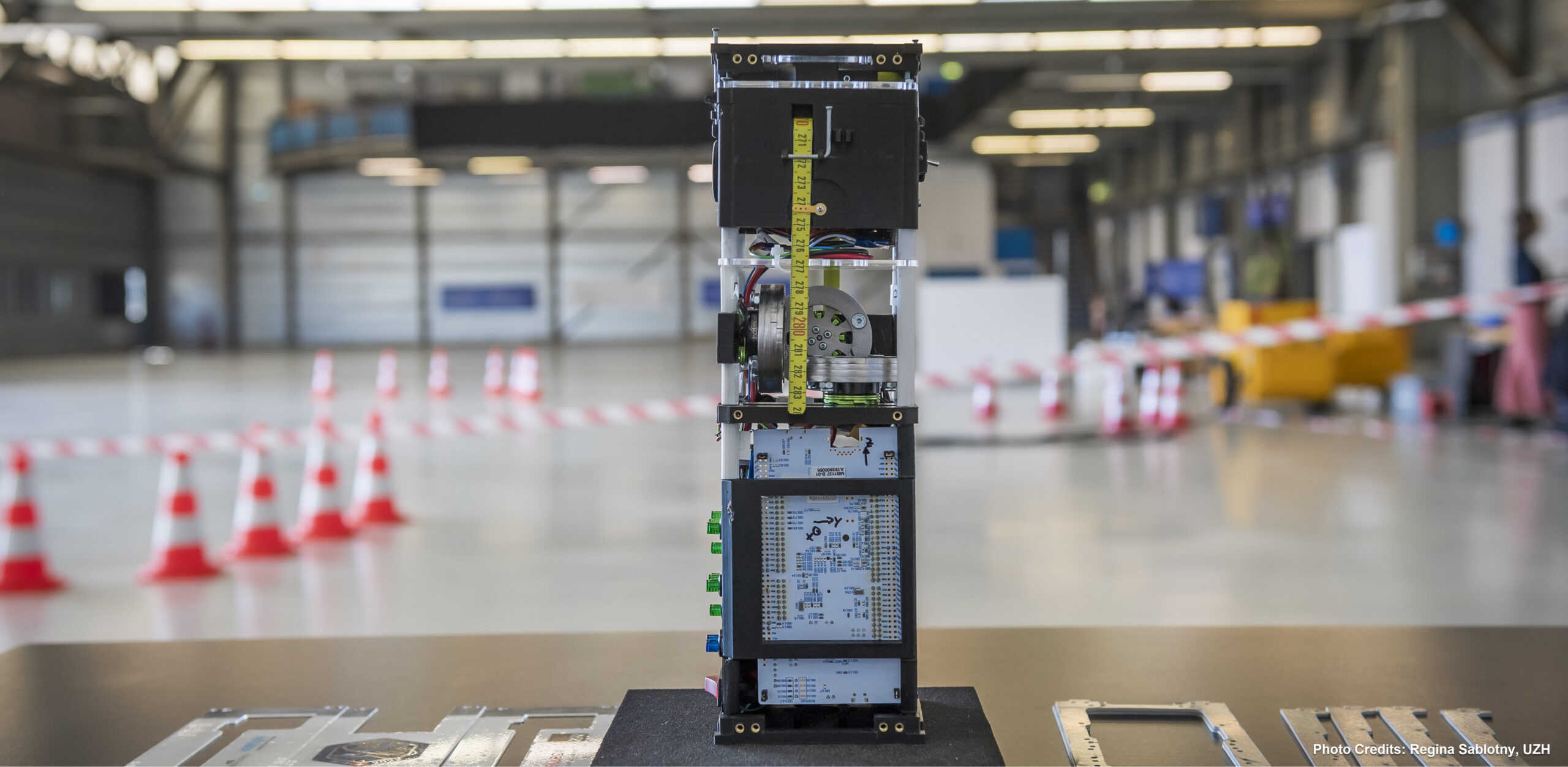
SOARR follows an adapted version of ESA and NASA’s development lifecycle. As we inherit certain components from SAGE some subsystems are further along than others. The team is currently preparing the functional baseline to finish the complete design by end of the next semester.

SUBSYSTEMS
JOIN
Become part of our journey to space!
Are you interested in space and want to be a part of something bigger? We are looking for talented and motivated students to help us design, build, and launch the small satellite into orbit. You will gain hands-on experience with spaceflight hardware, learn new skills, make valuable business connections, and gain friends for life. What we require from you is 10-15 hours per week as well as motivation and team spirit.
Join now and work with a team of passionate students to realize the development of our CubeSat mission. This is a once-in-a-lifetime opportunity to work on a real space mission and make a difference in the world of space exploration!

THE TEAM

We are SOarr
SOARR is a diverse team consisting of ETH, UZH, HSLU, and ZHAW students from various engineering and science disciplines. What brings us all together is our passion for space and contributing to novel technology for small satellites. We do all of this with a common goal: Launching and operating our very own satellite and thus, inspiring the next generation of aerospace engineers and professionals.
COLLABORATION WITH AMSAT-HB
Ham Radio Community AMSAT-HB. Our communication engineers are in close contact with its members, who support us with their broad knowledge in our reviews.
Together with AMSAT-HB, SOARR is actively engaged in STEM education. With our in-house developed linear transponder, we want to inspire many young people to get involved with amateur radio. We take part in exhibitions such as the Air and Space Days at the Swiss Museum of Transport in Lucerne or present our project at tech-days in grammar schools.

HOW TO CONTRIBUTE

YOU CAN MAKE A DIFFERENCE
By supporting SOARR, you get the opportunity to contribute to:
- education in the field of aerospace engineering and science
- novel technology for small satellites
- the next generation of highly skilled engineers and scientists
SUPPORTERS AND SPONSORS
ACADEMIC PARTNERS



GALACTIC PARTNERS


STELLAR PARTNERS

LUNAR PARTNERS





COMET PARTNERS





Social Contact