

Shop Trending Essentials for Pets
Enjoy fast, free delivery, exclusive deals, and award-winning movies & TV shows.
Buy New
-44% $38.89
FREE delivery Wednesday, October 21
Ships from: Amazon.com
Sold by: Amazon.com
$38.89 with 44 percent savings
List Price: $69.99
FREE delivery Wednesday, October 21
Or fastest delivery Tuesday, October 20
Usually ships within 5 to 7 days
$$38.89 () Includes selected options. Includes initial monthly payment and selected options. Details
Price
Subtotal
$$38.89
Subtotal
Initial payment breakdown
Shipping cost, delivery date, and order total (including tax) shown at checkout.
Shipper / Seller
Amazon.com
Amazon.com
Shipper / Seller
Amazon.com
Returns
FREE 30-day refund/replacement
Quick refund
Usually issued within 24 hours. See exceptions
FREE return
At least one free return option available.
Convenient dropoff
At any of our 50,000 US locations.
See return policy
Gift options
Available at checkout
Available at checkout This item is a gift. Change
At checkout, you can add a custom message, a gift receipt for easy returns and have the item gift-wrapped
Payment
Secure transaction
Your transaction is secure
We work hard to protect your security and privacy. Our payment security system encrypts your information during transmission. We don’t share your credit card details with third-party sellers, and we don’t sell your information to others. Learn more
$6.44
$3.99 delivery October 15 - 20. Details
Or fastest delivery October 9 - 14. Details
Only 1 left in stock - order soon.
$$38.89 () Includes selected options. Includes initial monthly payment and selected options. Details
Price
Subtotal
$$38.89
Subtotal
Initial payment breakdown
Shipping cost, delivery date, and order total (including tax) shown at checkout.
Access codes and supplements are not guaranteed with used items.
Ships from and sold by Seattlegoodwill.
Added to

Sorry, there was a problem.

There was an error retrieving your Wish Lists. Please try again.

Sorry, there was a problem.

List unavailable.
Kindle app logo image

Download the free Kindle app and start reading Kindle books instantly on your smartphone, tablet, or computer - no Kindle device required.

Read instantly on your browser with Kindle for Web.

Using your mobile phone camera - scan the code below and download the Kindle app.

QR code to download the Kindle App

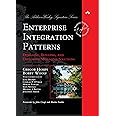
  • Enterprise Integration Patterns: Designing, Building, and Deploying Messaging Solutions (Addison-Wesley Signature Series (Fowler))

Follow the authors

Follow authors for new release and deal updates, plus improved recommendations. See updates from all followed authors in Your Books.
See all
Something went wrong. Please try your request again later.

Enterprise Integration Patterns: Designing, Building, and Deploying Messaging Solutions (Addison-Wesley Signature Series (Fowler))

4.6 out of 5 stars (581)

{"desktop_buybox_group_1":[{"displayPrice":"$38.89","priceAmount":38.89,"currencySymbol":"$","integerValue":"38","decimalSeparator":".","fractionalValue":"89","symbolPosition":"left","hasSpace":false,"showFractionalPartIfEmpty":true,"offerListingId":"mwT63DyO5B3XOvkyUhiWKMroYx5R3AR4gbhto8T%2BvYj6yU2uNgwgRDEuPfIz4P6yPYPsejcLbYr1h8UCaaQkMbKW6b1O2ihb6%2BUtPPCGDRNMyzha1IEOFhzIzp%2Bg%2BdScj6PZ9X3C94s%3D","locale":"en-US","buyingOptionType":"NEW","aapiBuyingOptionIndex":0}, {"displayPrice":"$6.44","priceAmount":6.44,"currencySymbol":"$","integerValue":"6","decimalSeparator":".","fractionalValue":"44","symbolPosition":"left","hasSpace":false,"showFractionalPartIfEmpty":true,"offerListingId":"mwT63DyO5B3XOvkyUhiWKMroYx5R3AR40VFYmkouebqy3fzFT8PpfAHLhOjpHnZ2V7lza7NpTh%2Fo%2BNBDOH7O7MulZJRVuO8Wwegh4nZvYXPiVSbI8bi9rnp5ts5pgn1IlZyuFB9Cxo5mcFPlT8B%2BfdcsqeD3JpcjNpTG0iB4Q4RrKnU%2FL0RyTYHlxQwXH4%2F8","locale":"en-US","buyingOptionType":"USED","aapiBuyingOptionIndex":1}]}

Purchase options and add-ons

Enterprise Integration Patterns provides an invaluable catalog of sixty-five patterns, with real-world solutions that demonstrate the formidable of messaging and help you to design effective messaging solutions for your enterprise.

The authors also include examples covering a variety of different integration technologies, such as JMS, MSMQ, TIBCO ActiveEnterprise, Microsoft BizTalk, SOAP, and XSL. A case study describing a bond trading system illustrates the patterns in practice, and the book offers a look at emerging standards, as well as insights into what the future of enterprise integration might hold.

This book provides a consistent vocabulary and visual notation framework to describe large-scale integration solutions across many technologies. It also explores in detail the advantages and limitations of asynchronous messaging architectures. The authors present practical advice on designing code that connects an application to a messaging system, and provide extensive information to help you determine when to send a message, how to route it to the proper destination, and how to monitor the health of a messaging system. If you want to know how to manage, monitor, and maintain a messaging system once it is in use, get this book.

Frequently bought together

This item: Enterprise Integration Patterns: Designing, Building, and Deploying Messaging Solutions (Addison-Wesley Signature Series (Fowler))
$38.89
Get it as soon as Wednesday, Oct 21
Usually ships within 5 to 7 days
Ships from and sold by Amazon.com.
+
$60.82
Get it as soon as Sunday, Oct 18
Sold by Book-center and ships from Amazon Fulfillment.
+
$51.75
Get it as soon as Sunday, Oct 11
In Stock
Ships from and sold by Amazon.com.
Total price: $00
To see our price, add these items to your cart.
Details
Added to Cart
Some of these items ship sooner than the others.
Choose items to buy together.

Customers also bought or read

Loading...

Editorial Reviews

From the Back Cover

  • Would you like to use a consistent visual notation for drawing integration solutions? Look inside the front cover.
  • Do you want to harness the power of asynchronous systems without getting caught in the pitfalls? See "Thinking Asynchronously" in the Introduction.
  • Do you want to know which style of application integration is best for your purposes? See Chapter 2, Integration Styles.
  • Do you want to learn techniques for processing messages concurrently? See Chapter 10, Competing Consumers and Message Dispatcher.
  • Do you want to learn how you can track asynchronous messages as they flow across distributed systems? See Chapter 11, Message History and Message Store.
  • Do you want to understand how a system designed using integration patterns can be implemented using Java Web services, .NET message queuing, and a TIBCO-based publish-subscribe architecture? See Chapter 9, Interlude: Composed Messaging.

Utilizing years of practical experience, seasoned experts Gregor Hohpe and Bobby Woolf show how asynchronous messaging has proven to be the best strategy for enterprise integration success. However, building and deploying messaging solutions presents a number of problems for developers. Enterprise Integration Patterns provides an invaluable catalog of sixty-five patterns, with real-world solutions that demonstrate the formidable of messaging and help you to design effective messaging solutions for your enterprise.

The authors also include examples covering a variety of different integration technologies, such as JMS, MSMQ, TIBCO ActiveEnterprise, Microsoft BizTalk, SOAP, and XSL. A case study describing a bond trading system illustrates the patterns in practice, and the book offers a look at emerging standards, as well as insights into what the future of enterprise integration might hold.

This book provides a consistent vocabulary and visual notation framework to describe large-scale integration solutions across many technologies. It also explores in detail the advantages and limitations of asynchronous messaging architectures. The authors present practical advice on designing code that connects an application to a messaging system, and provide extensive information to help you determine when to send a message, how to route it to the proper destination, and how to monitor the health of a messaging system. If you want to know how to manage, monitor, and maintain a messaging system once it is in use, get this book.


0321200683B09122003

About the Author

Gregor Hohpe leads the enterprise integration practice at ThoughtWorks, Inc., a specialized provider of application development and integration services. Drawing from his extensive experience designing and implementing integration solutions for enterprise clients, Gregor has published a number of papers and articles presenting a no-hype view on enterprise integration, Web services, and Service-Oriented Architectures. He is a frequent speaker at technical conferences around the world.

Bobby Woolf is coauthor of The Design Patterns Smalltalk Companion (Addison-Wesley, 1998), and author of articles in IBM DeveloperWorks, Java Developer's Journal, and elsewhere. He has been a tutorial presenter at OOPSLA, JavaEdge, and Smalltalk Solutions, among other conferences.


0321200683AB09122003

Product details

  • ASIN ‏ : ‎ 0321200683
  • Publisher ‏ : ‎ Addison-Wesley Professional
  • Publication date ‏ : ‎ October 10, 2003
  • Edition ‏ : ‎ 1st
  • Language ‏ : ‎ English
  • Print length ‏ : ‎ 736 pages
  • ISBN-10 ‏ : ‎ 9780321200686
  • ISBN-13 ‏ : ‎ 978-0321200686
  • Item Weight ‏ : ‎ 2.8 pounds
  • Dimensions ‏ : ‎ 7.38 x 1.71 x 9.55 inches
  • Part of series ‏ : ‎ Addison-Wesley Signatures (Fowler)
  • Best Sellers Rank: #212,932 in Books (See Top 100 in Books)
  • Customer Reviews:
    4.6 out of 5 stars (581)

About the authors

Follow authors for new release and deal updates, plus improved recommendations. See updates from all followed authors in Your Books.

Customer reviews

4.6 out of 5 stars
581 global ratings

Customers say

Customers find this book to be an essential resource on integration patterns, with one noting how it helps simplify complex designs. Moreover, they appreciate its readability, describing it as easy to comprehend. Additionally, customers value its relevance, with one mentioning it should be on every developer's bookshelf.
AI Generated from the text of customer reviews

Select to learn more

46 customers mention content, 44 positive, 2 negative
Customers find the book to be essential reading, particularly praising its comprehensive coverage of integration patterns.
great book, must read for everyone looking at Enterprise Integration...Read more
Five StarsRead more
Four StarsRead more
...implement, and maintain the enterprise integration patterns, this awesome book has become the bible of enterprise integration patterns on which...Read more
13 customers mention relevance, 13 positive, 0 negative
Customers find the book highly relevant, with one customer noting it should be on every developer's bookshelf.
A must have reference for integration architects, developers involved in system integrations or willing to learn this subject....Read more
It's 2023, and this book is STILL relevant....Read more
This is THE reference about the subject... still applicable today, and still a lot of folks that definitely should read it...Read more
Excelente. Indispensable.Read more
7 customers mention design patterns, 7 positive, 0 negative
Customers appreciate the book's coverage of design patterns, with one customer noting how it helps simplify complex designs, while another mentions that good basic design work remains relevant over time.
...this book isn't about any particular technology, it's about explaining patterns that you can reach for again and again as you face certain...Read more
Amazing how good basic design work survives the years. Still totally relevant even though over 10 years has elapsed since publication....Read more
...It will certainly help simplify complex designs and contribute to avoiding a host of possible missteps. Definitely worth your money.Read more
Gregor has a gift for explaining design patterns....Read more
6 customers mention readability, 5 positive, 1 negative
Customers find the book easy to comprehend and read.
...That's said, book is very well written and easy to comprehend. This book is a great value!Read more
...and communicates complicated problems in simple ways that are very understandable.Read more
...I found the book to be very well written and easy to read: the authors walk you through different thought processes for solving a particular problem...Read more
...You can really see the benefit that these patterns provide to simplifying, organizing and clarifying the situation.Read more

Top reviews from the United States

  • 5 out of 5 stars
    Not Just Another Patterns Book
    Reviewed in the United States on November 8, 2010
    Brief content visible, double tap to read full content.
    Full content visible, double tap to read brief content.

    When I first saw this book I thought it looked nice and noted that it was associated with Martin Fowler, but figured that I had plenty of patterns books and didn't need yet another patterns book. I couldn't have been more mistaken. Recently I was reading the early access edition of Spring Integration in Practice from Manning Press and noticed that they kept referring to the Enterprise Integration Patterns book. It turns out that the book breaks new ground to cover messaging patterns in a way that I've not seen in any previous book. "Messaging patterns" are not simply messaging in the sense of Java Message Service (JMS) (although they may include that). They are patterns that have to do with work flow through an application where the message carries the payload that needs to be worked on, often in multiple steps. The book has plenty of diagrams to explain these patterns and the web site has links to free stencils that can be downloaded for Visio and other applications. While the web site has quite a bit of free content, there's considerably more meat in the book, so don't think that you've seen it all if you've been reading through patterns on the web site.

    In short, Enterprise Integration Patterns is an essential book for those working in the enterprise spaces that want to learn from other developers that have come before them and captured a bit of what they've learned. It will certainly help simplify complex designs and contribute to avoiding a host of possible missteps. Definitely worth your money.

    4 people found this helpful
    Sending feedback...
    Thank you for your feedback.
    Sending feedback...
    Thanks, we'll investigate in the next few days.

    We'll check if this review meets our community guidelinesOpens in a new tab. If it doesn't, we'll remove it.

  • 5 out of 5 stars
    SW Integration Engineering at its best
    Reviewed in the United States on December 19, 2005
    Brief content visible, double tap to read full content.
    Full content visible, double tap to read brief content.

    Deserves to take place in the great line up of GoF, POSA1, POSA2, EAA, Core Security Patterns (other "patterns" books omitted intentionally).

    I have done Messaging and message based integration before, but this book takes essentially what is an art form and makes a science out of it.

    First it starts with 4 different styles of integration (File based, Shared Database, RPC, Messaging) and discusses them intelligently giving their advantages and disadvantages.

    Then it gets in to the major aspects/ pieces of Message based integration (Message, Channel, Routing, Transformation, End Points, System Management etc). It again discusses them as patterns and develops a good vocabulary of the messaging domain.

    Then comes the meat where for each aspect of Messaging, it gives about 8 to 15 specific patterns, names them, shows their pros and cons, gives the trade off and intelligently discusses their usage. As part of the examples it draws example from JMS/ TIBCO/ MSMQ etc. Priceless.

    What I loved about this book is how it makes you rethink everything you may have been doing before in software architecture/ integration using technologies such as Web Services, JMS, J2EE etc.

    For example, many would not have fully groked MDBs as "event driven", "competing", "transactional" message consumers, that are suited for "Point to Point" integration. Yes I know every body uses them but do you really understand the implications for transaction scope and threading? . Or Polling message consumers have their advantages ?

    Good discussion on relate standards and technologies included (Web Services, Axis Implementation, WS-*, SOAP etc)

    Buy this guys and may be enterprise integration would be less messy.

    22 people found this helpful
    Sending feedback...
    Thank you for your feedback.
    Sending feedback...
    Thanks, we'll investigate in the next few days.

    We'll check if this review meets our community guidelinesOpens in a new tab. If it doesn't, we'll remove it.

  • 5 out of 5 stars
    Enterprise Integration Patterns - an awesome book about Integration and design patterns
    Reviewed in the United States on December 26, 2011
    Brief content visible, double tap to read full content.
    Full content visible, double tap to read brief content.

    Enterprise Integration Patterns are increasingly central to what I am doing on integration projects nowadays and how I am using them. It always depends on the context and technologies with which we are using the patterns. There have been many libraries and frameworks over the years to help with integration. But frequently the concepts behind the Enterprise Integration Patterns get transformed into some complex class hierarchies or objects that need to be wired together just so, and the original intentions and patterns are often lost. As a Java developer I am often forced from then on to focus on the low-level detail and some complex class library API, losing the bigger picture and patterns.

    Many frameworks, like e.g. Apache Camel and enterprise service buses, like Fuse ESB, support the usage of enterprise integration patterns and watching the codebase, community, and number of components, technologies, and data formats grow massively as more and more developers have found frameworks like Apache Camel an ideal way to design, implement, and maintain the enterprise integration patterns, this awesome book has become the bible of enterprise integration patterns on which many of the concepts of Apache Camel are based. That's why... it should not be missed in any serious developer's technical library.

    4 people found this helpful
    Sending feedback...
    Thank you for your feedback.
    Sending feedback...
    Thanks, we'll investigate in the next few days.

    We'll check if this review meets our community guidelinesOpens in a new tab. If it doesn't, we'll remove it.

  • 4 out of 5 stars
    The bible of asynchronous messaging
    Reviewed in the United States on November 17, 2018
    Brief content visible, double tap to read full content.
    Full content visible, double tap to read brief content.

    This is an excellent book on the patterns and concepts in enterprise integration. I've been doing enterprise integration since this book was written with a middleware product (webMethods) and J2EE and finally got around to reading this book. I found the book to be very well written and easy to read: the authors walk you through different thought processes for solving a particular problem and why the pattern is the best solution. Even though the book is 15 years old as of my review it is still pertinent today.

    The patterns explain the different problems one typically needs to solve to do asynchronous messaging integration with legacy and modern applications.

    Many of the patterns are included in commercial middleware products like webMethods, Tibco, Mulesoft, etc. Others you will need to build yourself to solve specialized problems.

    The book examples are JMS and MSMQ centric, with a few Tibco examples too. The code examples are geared toward building solutions with those simple technologies rather than showing all of the middleware vendor tools. Therefore, I wouldn't read this book to learn how to code things. Read it to understand how asynchronous messaging problems should be solved, and to evaluation SOA and middleware products for features that implement these patterns.

    In the last few years SOA and microservices have been the buzzwords in enterprise integration, but there are still many patterns from this book you may use because there are still many legacy apps in use that can't be modified to directly support web services, and many tasks still need to be asynchronous and decoupled.

    22 people found this helpful
    Sending feedback...
    Thank you for your feedback.
    Sending feedback...
    Thanks, we'll investigate in the next few days.

    We'll check if this review meets our community guidelinesOpens in a new tab. If it doesn't, we'll remove it.

  • 5 out of 5 stars
    Very good - shows the problem each pattern is solving
    Reviewed in the United States on January 24, 2014
    Brief content visible, double tap to read full content.
    Full content visible, double tap to read brief content.

    I've been a s/w architect for years so ... I've encountered most of these integration patterns. As I went through patterns that I haven't used, I kept the same question in my head: how is this better than if I just did it without a pattern (this is the same question I keep applying to frameworks and tools such as ESBs and business process orchestration languages like BPEL). With this, I found the authors thought along the same lines and were able to provide those answers without my having to think about the issue of not using the pattern. You have to know what the alternatives are that the pattern is trying to resolve and just why the alternatives are a problem -- and this book delivers on that. Note: I found it was helpful to keep in mind that these are application integration patterns: patterns for integrating applications as opposed to patterns for building an enterprise application.

    14 people found this helpful
    Sending feedback...
    Thank you for your feedback.
    Sending feedback...
    Thanks, we'll investigate in the next few days.

    We'll check if this review meets our community guidelinesOpens in a new tab. If it doesn't, we'll remove it.

  • 5 out of 5 stars
    Invaluable resource for corporate developers
    Reviewed in the United States on September 7, 2004
    Brief content visible, double tap to read full content.
    Full content visible, double tap to read brief content.

    This is the third pattern book in my collection (the other two are Analysis Patterns by Martin Fowler and the definitive Design Patterns by the Gang of Four) and IMHO this is the best example yet of where patterns can really improve the development process. This is the first book I've seen to address the area of enterprise development where the real heavy lifting takes place. Applications don't miraculously integrate with one another; it takes talented, knowledgeable IT personnel to wire everything together. If you're one of those people, Enterprise Integration Patterns is an important addition to your toolkit.

    Chapter 2 takes the reader through the integration efforts of a fictional enterprise to demonstrate some of the patterns in action. The descriptions of the problems and their possible solutions... just make sense. You can really see the benefit that these patterns provide to simplifying, organizing and clarifying the situation.

    11 people found this helpful
    Sending feedback...
    Thank you for your feedback.
    Sending feedback...
    Thanks, we'll investigate in the next few days.

    We'll check if this review meets our community guidelinesOpens in a new tab. If it doesn't, we'll remove it.

  • 5 out of 5 stars
    Transformed my Perspective on Enterprise Application Integration Scenarios
    Reviewed in the United States on December 1, 2012
    Brief content visible, double tap to read full content.
    Full content visible, double tap to read brief content.

    I cannot recommend this book enough for software architects designing applications that interact in any way with another outside system. With today's movement towards cloud computing and always-online environments, that's practically everything. Going further, when you consider that an application can coordinate its own interaction with internal subsystems using Enterprise Integration Patterns, this design philosophy truly applies everywhere. Enterprise Integration Patterns take to the next level the same separation-of-concerns principles that Object-Oriented Design introduced, teaching us encapsulation of entire systems regardless of architecture.

    This won't be the most in-depth review, but I'd encourage you to visit these two sites for a deeper exploration of the topic:

    [...][...]

    -- Apache's extensive Java reference implementation, including a nice Wiki with example use cases and creative recipes.

    One person found this helpful
    Sending feedback...
    Thank you for your feedback.
    Sending feedback...
    Thanks, we'll investigate in the next few days.

    We'll check if this review meets our community guidelinesOpens in a new tab. If it doesn't, we'll remove it.

  • 5 out of 5 stars
    As the title implies, correctly focuses on the patterns, not the technology
    Reviewed in the United States on January 25, 2023
    Brief content visible, double tap to read full content.
    Full content visible, double tap to read brief content.

    It's 2023, and this book is STILL relevant. Entire categories of tooling have probably sprung up, been fashionable and then fallen by the wayside and this book just keeps chugging along. That's because this book isn't about any particular technology, it's about explaining patterns that you can reach for again and again as you face certain situations over your architecture/designer/developer career.

    9 people found this helpful
    Sending feedback...
    Thank you for your feedback.
    Sending feedback...
    Thanks, we'll investigate in the next few days.

    We'll check if this review meets our community guidelinesOpens in a new tab. If it doesn't, we'll remove it.

Top reviews from other countries

    Translated by Amazon
    See original
  • 5 out of 5 stars
    Life long reference
    Reviewed in Australia on June 12, 2026
    Brief content visible, double tap to read full content.
    Full content visible, double tap to read brief content.

    Great timeless book. Good for the software engineer.

    Sending feedback...
    Thanks, we'll investigate in the next few days.

    We'll check if this review meets our community guidelinesOpens in a new tab. If it doesn't, we'll remove it.

  • 5 out of 5 stars
    Excelente
    Reviewed in Mexico on August 23, 2019
    Brief content visible, double tap to read full content.
    Full content visible, double tap to read brief content.

    Tenia tiempo queriendo comprar este libro y no me arrepiento. La calidad del libro y el contenido son excelentes

    Sending feedback...
    Thanks, we'll investigate in the next few days.

    We'll check if this review meets our community guidelinesOpens in a new tab. If it doesn't, we'll remove it.

    Translated from Spanish by Amazon
    See original
  • 5 out of 5 stars
    Very good reference, top notch printing quality
    Reviewed in Sweden on November 19, 2023
    Brief content visible, double tap to read full content.
    Full content visible, double tap to read brief content.

    20 years old and more relevant today than when it was written. Also comes in an excellent hardcover format which I wish were the standard for books in this price range *stares at oreiley*.

    The only downside I can think of is that the book sort of conflates different kinds of messaging with each other (i.e. what it calls command messages, document messages, and events), when they are really quite different and should be split between truly asynchronous ones and real time ones. However, the fact that each pattern is self contained makes it less of an issue since you can just focus on the patterns relevant for your current context.

    Sending feedback...
    Thanks, we'll investigate in the next few days.

    We'll check if this review meets our community guidelinesOpens in a new tab. If it doesn't, we'll remove it.

  • 5 out of 5 stars
    of all the good technics that can come to your mind
    Reviewed in Canada on August 7, 2016
    Brief content visible, double tap to read full content.
    Full content visible, double tap to read brief content.

    Still in 2016 this book is relevant. It is a proof of its quality. When you think today about integrating solutions, of all the good technics that can come to your mind, a lot of them can be found in this this one (rpc, ftp, messaging solutions)

    various frameworks (like spring integration or camel eip) are implementations of patterns written in this book.

    With classic object oriented and domain driven patterns, the EI patterns belong to my list of must have for writing large scale solutions.

    Sending feedback...
    Thanks, we'll investigate in the next few days.

    We'll check if this review meets our community guidelinesOpens in a new tab. If it doesn't, we'll remove it.

  • 5 out of 5 stars
    Um clássico.
    Reviewed in Brazil on August 21, 2026
    Brief content visible, double tap to read full content.
    Full content visible, double tap to read brief content.

    Indispensável, um clássico.

    Sending feedback...
    Thanks, we'll investigate in the next few days.

    We'll check if this review meets our community guidelinesOpens in a new tab. If it doesn't, we'll remove it.

    Translated from Portuguese by Amazon
    See original