

The Executive Yuan's Referendum Review Committee late last night voted down the Taiwan Solidarity Union's (TSU) request to hold a referendum on the government's proposed economic cooperation framework agreement (ECFA) with China. The vote, which was announced shortly before 11pm, was 12-4.
The TSU's application requested a referendum on the question: “Do you agree that the government should sign an ECFA with China?”
“The reason stated for the referendum proposal is to ask if the government has the right to sign an ECFA. However, the question asked in the proposal is about the contents of an ECFA, which is different from the stated reason,” Referendum Review Committee Chairman Chao Yung-mau (趙永茂) told a press conference after the five-hour meeting.
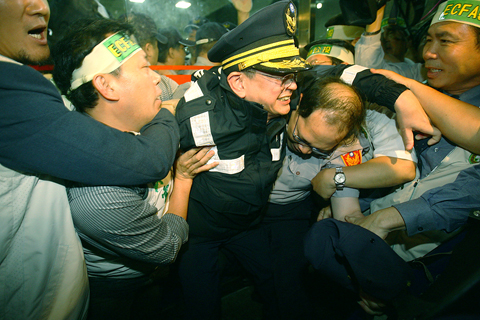
PHOTO: CNA
The committee had convened at 6pm.
Chao said a referendum proposal should be aimed at changing the status quo, but the government would not have to take any action to change its policy, even if the proposed referendum had passed, because of the wording — asking whether voters agree with the government’s plan to sign an ECFA.
“The referendum proposal, therefore, does not meet the qualification of ‘approving a government policy,’ as stated in the Referendum Act (公民投票法),” he said.
The TSU may appeal the decision, he said.
The committee has 21 members, but only 19 attended the meeting. As chairman, Chao did not vote because he presided over the meeting, while committee member Arthur Ding (丁仁方) left before the vote. Of the 17 members who voted, one cast a blank vote.
The four committee members who voted in favor of the proposal were Yang Wan-ying (楊婉瑩), Chen Tun-yuan (陳敦源), Kuo Lin-yung (郭林勇) and Chen Miao-fen (陳妙芬).
“The referendum proposal asks whether the government should sign an ECFA with China. It is certainly asking for the people’s approval on a major policy, which meets the criteria of the right to hold a referendum as granted by the Constitution,” the four said in a written statement.
The committee's rejection was immediately criticized by TSU Chairperson Huang Kun-huei (黃昆輝), who said the committee had no right to write off a referendum proposal supported by more than 200,000 people.
The TSU said it would immediately begin preparations for another referendum proposal, but gave no details.
“An ECFA has to be put to a public vote,” Huang said. “If Ma, as a popularly elected president, doesn’t listen to the public, he will pay the price politically.”
“If an ECFA would benefit Taiwan as the government says, why is Ma afraid of putting this proposal to a public vote? What is he afraid of?” Huang said.
Premier Wu Den-yih (吳敦義) had previously said the government respects the people's right to referendums, as long as they are held legally and constitutionally. However, the TSU initiative did not meet those requirements, since the content of the proposed pact has not been announced, he said.
Huang also said the TSU would prepare an initiative for a referendum asking voters to dismiss the review committee, saying the committee did not have the moral authority to make decisions about a right protected by the Constitution.
In addition, the TSU would investigate the possibility of holding a referendum on revising the Referendum Act, which sets an unfairly high threshold for referendum questions to pass, he said.
The Referendum Act stipulates that a referendum proposal, after completing the first stage of collecting signatures from 0.5 percent of the number of people who were eligible to vote in the last presidential election, must obtain approval from the Referendum Review Committee before it can proceed to the next stage of collecting signatures from 5 percent of that same number. It must then pass a second review before making it to the polling stations.
Huang also hinted at Chinese involvement in the decision. He said the committee’s decision came after the government came under pressure from Chinese authorities.
A TSU source said the party still has about 100,000 signed petition forms left over from its initial application. A total of 86,000 signatures are needed to initiate a referendum process.
TSU officials said they would try and use the remaining forms to initiate another referendum proposal. However, it was not immediately clear whether the Referendum Review Committee would accept the forms because the law says the same referendum proposal cannot be submitted twice.
Democratic Progressive Party (DPP) spokesman Lin Yu-chang (林右昌) said the committee decision was regrettable and raised concerns that the Chinese Nationalist Party (KMT) had pressured committee members over their decision.
During the committee meeting at the Joint Central Government Officers Tower in Taipei, DPP lawmakers tried to break into the venue by climbing over the fence and metal gates surrounding the building. Police officers rushed to stop the lawmakers, triggering scuffles and clashes.
The lawmakers were able to breach the police’s first line of defense, but were stopped in front of the building’s glass doors. The police shut down elevators to prevent protesters from getting into the building through the underground parking garage and reaching the room on the 10th floor where the committee was deliberating.
Prevented from reaching the committee, the DPP lawmakers held a sit-down protest outside.
Lin said the DPP would most likely hold a provisional meeting this morning and issue a formal statement after it receives a copy of the committee’s decision.
The DPP’s event in support of a referendum on an ECFA, scheduled for Kaohsiung City’s Glory Pier tomorrow, will go ahead as planned.

EYE ON 2027: The US military has placed equipment, materiel and personnel on the islands near China, a US officer said while warning about the threat from China The US Army Pacific (USARPAC) is deploying forces and equipment across the region based on the assumption that Beijing could possess the military capability and the intent to invade Taiwan by next year, a top US commander said on Tuesday. Speaking at the TechNet Indo-Pacific conference in Honolulu, US General Ronald Clark said that the threat posed by the so-called “Davidson window” is “still valid,” US military newspaper Stars and Stripes reported on Wednesday. The term stems from a 2021 warning by Admiral Philip Davidson, then-head of the US Indo-Pacific Command, that the threat of Chinese military action against Taiwan could materialize
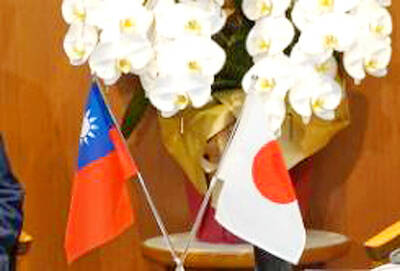
Taiwan and Japan might sign a wide-ranging trade agreement by the end of this year, which could help break a deadlock in Taiwan’s trade diplomacy if completed, Nikkei Asia reported yesterday. Japan is negotiating with the administration of President William Lai (賴清德) to reach a comprehensive economic agreement modeled after the Enhanced Trade Partnership Arrangement finalized by the UK and Taiwan in 2023, it said, citing two sources familiar with the matter. “The Enhanced Trade Partnership between the UK and Taiwan sets a precedent for Japan to follow,” one of the sources told the media outlet. The framework leaves room for future agreements
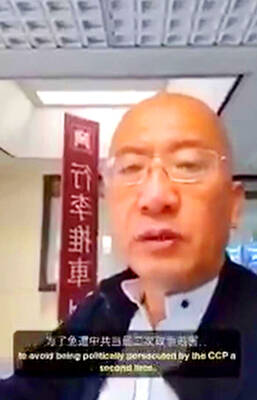
Chinese national Cheng Wanjun (程萬軍), who was at Taiwan Taoyuan International Airport after arriving on a connecting flight from Thailand on Monday and sought asylum in Taiwan, was deported to Thailand early yesterday, the National Immigration Agency (NIA) said. In a video circulating on X, Cheng identified himself as a former host at China Central Television (CCTV) and said he was seeking temporary humanitarian protection in Taiwan. Cheng said he was sentenced to six years in prison after he was recorded and reported to authorities in 2019 for criticizing “a ruler who loses his country.” After his release, he was forced to go

‘ONE CHINA’ DECISION: A Cabinet spokesperson said that Pakistan had pandered to Beijing, and disregarded international rules and reality with the overflight ban The first Taiwanese commercial aircraft since restrictions were lifted flew over Pakistan yesterday morning following an abrupt U-turn by authorities to approve permits that were briefly revoked due to Islamabad’s “one China” policy. EVA Airways (長榮航空) Flight 65 from Taipei to Vienna entered Pakistani airspace at about 3:30am local time, Flightradar24 tracking data showed. All other Europe-bound EVA Air and China Airlines (華航) flights that departed late on Wednesday night into early yesterday morning opted to use Russian airspace, or go via India. The airlines had been forced to detour, including flying over Russia, since Sunday, after Pakistan shut its airspace to Taiwanese


 RSS