

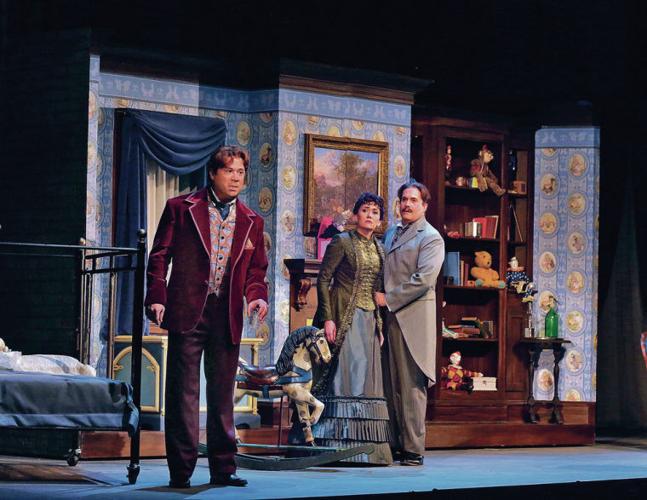
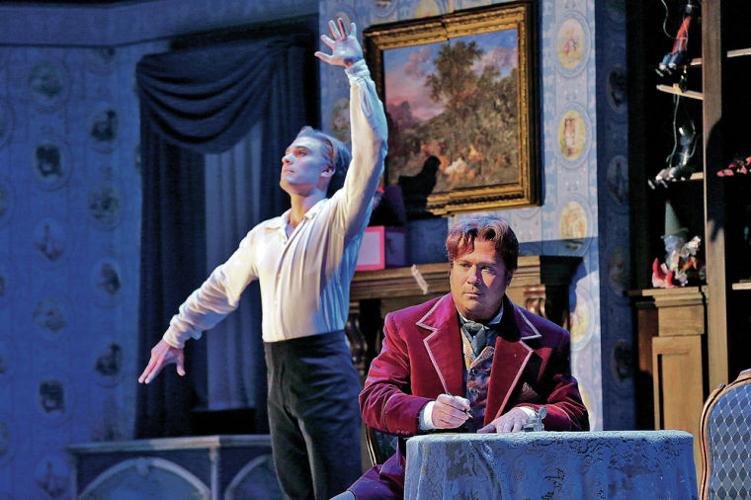
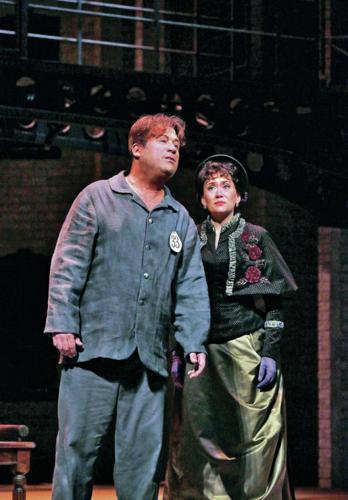
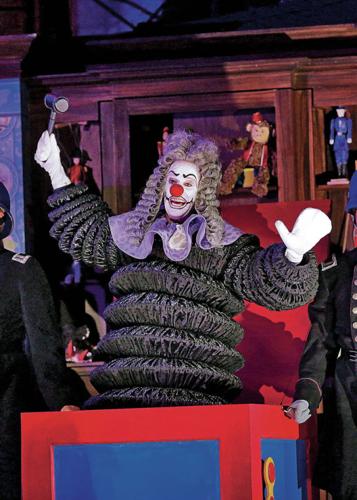
On Saturday evening, The Santa Fe Opera offered the world premiere of Oscar, a two-act work by Theodore Morrison, who penned the libretto jointly with the British opera director John Cox.
Prior to Oscar, SFO had premiered 13 operas since its founding in 1956. Most were launched in a flurry of excitement and optimism but then receded from view, living on as minor footnotes to operatic history. The 14th opera on the list has an excellent chance of following this time-honored tradition. It will at least be repeated in 2015, when it figures on the schedule of Opera Company of Philadelphia, which jointly commissioned it with Santa Fe. I don’t doubt that the countertenor David Daniels, who the work was written to showcase, will put his shoulder to promoting it beyond then; and he may be joined in that effort by other countertenors because it provides them with an extended starring role. But in the long run, an opera must sink or swim on its own merits, and I must leave it to others to be hopeful about the buoyancy of this one.
Oscar Wilde’s caustic wit made him a darling of late-Victorian salon society, but this opera focuses instead on the low point of his life. Manipulated by his boyfriend, Bosie, into suing Bosie’s father for libel (the father had asserted publicly that Oscar and Bosie were lovers), Wilde not only loses that case but is then found guilty of gross indecency and is cast into two years’ brutal confinement at Reading Gaol. It is a heart-rending chapter of Wilde’s biography that depicts a life going down the drain; but deprived of invigorating personal conflicts or any departure from the inevitable, the work lacks a dramatic arc that might sustain it as a full-length opera. One senses that the creators realized this when they decided to superimpose an unrelated character, the American poet Walt Whitman, who observes the action as an outsider. He introduces the tale at the outset, strolls in to comment on the situations as they unroll and ushers Wilde into the realm of immortality at the end. This device is useful to the extent that it efficiently fills in some backstory, but it also gives away where the drama is going. “Oscar himself was prosecuted by the Crown for ‘gross indecency’ and found guilty,” states Whitman up front — after which the act moves back a step to the runup to that event, and then the action plays out exactly as we have been told it will. This is not a unique example of how the libretto manages to eviscerate what is already only marginally dramatic.


